
Short answer: a glute workout works when you do heavy hip extension (hip thrusts, Romanian deadlifts) and deep squat and lunge patterns about twice a week, 10-20 hard working sets for the glutes per week in total, and add weight or reps as you get stronger. A hip abduction exercise on a machine or with a band covers the smaller glute muscles on the side of the hip. What matters is not one magic exercise but load that keeps going up week after week.
A familiar picture: band around the knees, 50 kickbacks per leg and glutes on fire after every session. Three months later your jeans fit exactly like they did on day one. The burn feels productive, but muscle only grows when it works close to its limit and the load goes up over time. This guide covers the three glute muscles, the best glute exercises with exercise library links, what the research actually says about hip thrusts and squats, three ready-made workouts for the gym and home, and weekly volume and progression.
Glute anatomy: three muscles, two jobs
Your glutes are not one muscle. The gluteus maximus is one of the largest muscles in the body and gives the glutes most of their shape. Its main job is hip extension: it straightens the hip when you stand up from a squat, drive your hips forward or climb stairs. It also rotates the thigh outward.
The gluteus medius and minimus sit on the side of the hip, partly underneath the gluteus maximus. They abduct the thigh, meaning they move the leg out to the side, and they keep your pelvis level when you stand on one leg: in every step, every lunge and every Bulgarian split squat. The gluteus medius shapes the upper and outer part of the glutes.
That gives you the whole logic of glute training. You need heavy hip extension (hip thrusts and hinges like the Romanian deadlift), a squat or lunge pattern where the hip bends deeply, and an abduction exercise for the side of the hip. The gluteus maximus can handle big loads, so it needs heavy weights too. Bodyweight alone is enough only at the very start.
The best glute exercises at the gym
These nine exercises cover everything the glutes do. You don't need all of them in the same week: a solid program has one hip extension, one hinge, one squat or lunge pattern and one abduction exercise. The table shows what each exercise does for the glutes and why it made the list.
The best glute exercises and what they do
| Exercise | Movement type | What it does for the glutes | Why it's on the list |
|---|---|---|---|
| Barbell hip thrust | Hip extension | Gluteus maximus, peak load at the top | The easiest way to load the glutes heavy without your back or quads limiting you |
| Romanian deadlift | Hinge | Gluteus maximus and hamstrings in a stretched position | Loads the glutes in the long position, where the hip thrust is at its lightest |
| Barbell back squat | Squat | Gluteus maximus and quads, most at the bottom of a deep squat | Full squats grew the glutes about three times more than half squats |
| Bulgarian split squat | Single-leg squat | Gluteus maximus and medius | Heavy load for one leg with lighter weights, hip stability included |
| Dumbbell walking lunge | Single-leg squat | Gluteus maximus and medius | A long step and slight forward lean shift work from the quads to the glutes |
| Dumbbell step-up | Single-leg step | Gluteus maximus and medius | In a systematic review, step-ups showed some of the highest glute activation |
| Leg press | Machine | Gluteus maximus and quads | Heavy load without stressing the back, a high foot position adds hip flexion |
| Seated hip abduction machine | Abduction | Gluteus medius and minimus | The only exercise on the list that loads the side of the hip directly |
| Kneeling cable glute kickback | Isolated hip extension | Gluteus maximus | A good finisher after the heavy lifts, the cable keeps tension even |
Technique cues with exercise library links
Every exercise has an animation and a technique guide in the SisuLift exercise library. Below is the one cue that fixes the most common mistake.
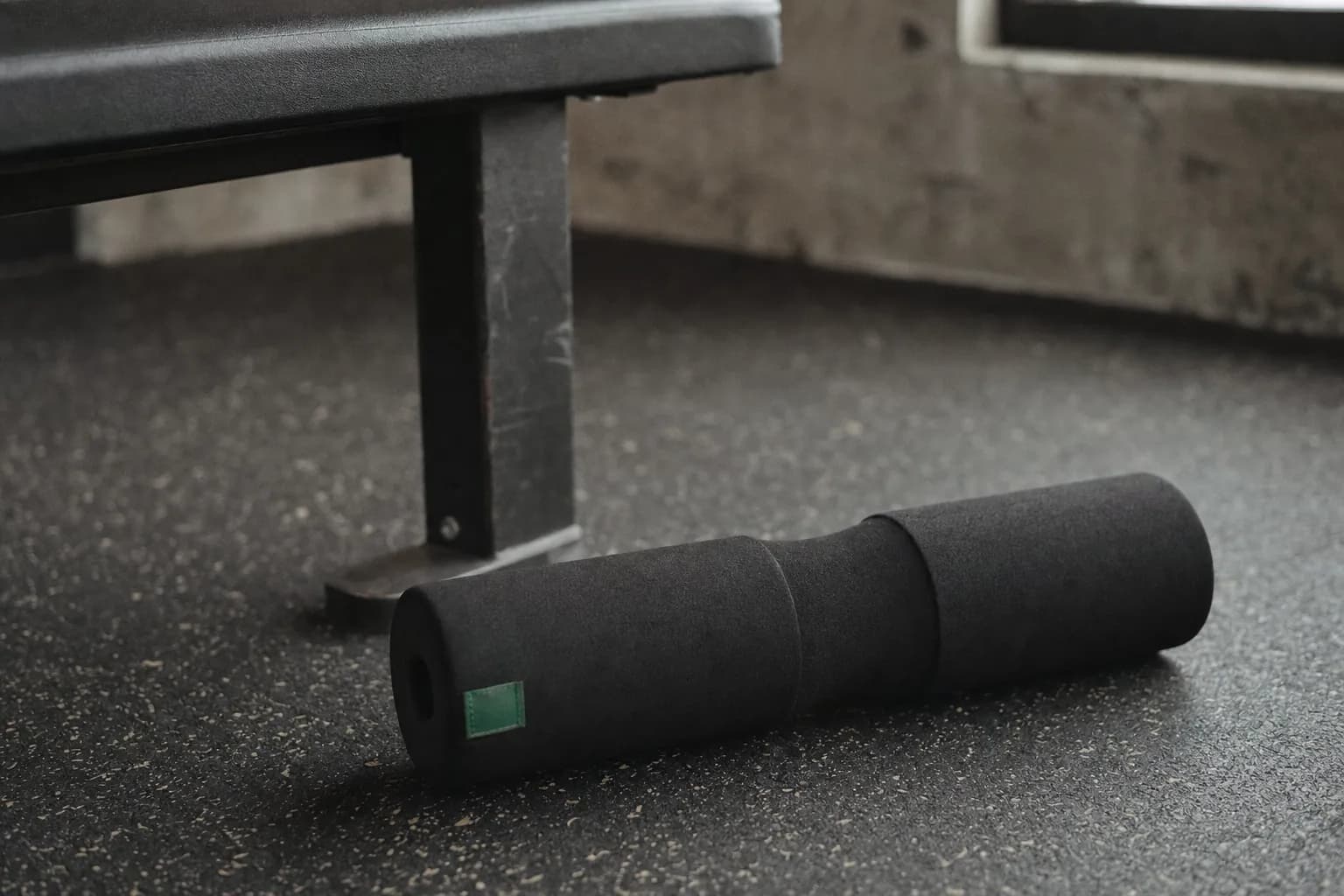
- Barbell hip thrust: Upper back against the edge of a bench, shins vertical at the top and chin slightly tucked. Pause for a second at the top and stop when your hips are in line, don't arch your lower back. Put a pad under the bar.
- Romanian deadlift: Push your hips back and slide the bar down your thighs with slightly bent knees and a flat back. Go as low as your back stays flat, usually around mid-shin. Stand up by squeezing your glutes together.
- Barbell back squat: Squat as deep as you can keep a neutral spine, ideally with your hip crease below the knee. For the glutes, depth is the single most important detail of this lift.
- Bulgarian split squat: Rear foot on a bench. A longer stance and a slight forward lean bias the glutes, a short stance and upright torso bias the quads. Start with your weaker leg.
- Dumbbell walking lunge: Long step, back knee close to the floor and drive up through the front heel. Dumbbells at your sides without swinging.
- Dumbbell step-up: Whole foot on the box and stand up with the top leg, the bottom leg must not push off. Box at about knee height.
- Leg press: Feet high on the platform, shoulder width or wider. Go as deep as your lower back stays against the backrest.
- Seated hip abduction machine: Slow reps, pause at the outer position and control the return, 12-20 reps. Many people feel it more in the upper glutes with a slight forward lean.
- Kneeling cable glute kickback: Ankle strap on a low pulley, hips square and the movement coming from the hip. If your lower back arches at the end, the range is too long or the weight too heavy.
Hip thrust or squat: what the research says
The hip thrust earned its reputation as the best glute exercise from EMG measurements. In a study by Contreras and colleagues (2015), 13 trained women did back squats and hip thrusts at roughly a 10-rep max, and gluteus maximus electrical activity was about twice as high in the hip thrust. The researchers themselves noted that activation alone does not tell whether an exercise builds more muscle.
Since then it has been tested with training studies. In the study by Plotkin and colleagues (2023), 34 previously untrained young adults trained for 9 weeks with either hip thrusts or back squats at the same number of sets. On MRI, glute growth was similar in both groups. Squats also grew the quads and adductors more, and each exercise improved its own max the most. EMG readings from the first session did not predict whose glutes grew the most.
A study by Barbalho and colleagues (2020) leaned towards the squat. 22 well-trained women did either back squats or hip thrusts for 12 weeks, and gluteus maximus thickness increased by 9.4 percent in the squat group and 3.7 percent in the hip thrust group. Squat depth matters too: in a study by Kubo and colleagues (2019), 17 men trained for 10 weeks, and full squats increased gluteus maximus volume by 6.7 percent versus 2.2 percent for half squats.
Bottom line: there is no single best glute exercise. Deep squats and hip thrusts both grow the glutes, and squats grow your quads at the same time. The studies are small (17-34 participants), so don't read too much into individual percentages. The smartest program combines a squat or lunge pattern, a hip extension and a hinge, and picks the variations you can load heavy without pain. A systematic review by Neto and colleagues (2020) listed step-ups, hip thrusts, deadlifts and lunges among the exercises with very high glute activation.
One more detail: in the Plotkin study, the gluteus medius and minimus barely grew with either exercise. That is a good reason to keep a separate abduction exercise in your program if you want more shape in the upper and outer glutes.
Glute workout for the gym and at home: 3 ready-made sessions
In every workout, stop each set with 1-3 reps left in the tank, and use the rep range to decide when to add weight: once all sets hit the top of the range, go heavier. If you don't know which weight to start with, the working weight calculator gives you a weight for each rep range based on your latest set.
Workout 1: beginner glute workout at the gym
The same session twice a week, with at least two rest days in between. That adds up to 8 glute sets per session and 16 per week, plus the abduction work. For the first two weeks you can do one set less per exercise and focus on the range of motion. Add 2-3 upper body exercises at the end to make it a full-body session.
Workout 1: beginner, the same session twice a week
| Exercise | Sets | Reps | Rest |
|---|---|---|---|
| Leg press, feet high on the platform | 3 | 10-12 | 2 min |
| Barbell hip thrust | 3 | 10-12 | 2 min |
| Dumbbell Romanian deadlift | 2 | 10-12 | 90 s |
| Seated hip abduction machine | 2 | 15-20 | 60 s |
Workout 2: advanced glute days A and B
Two different sessions a week, for example A on Monday and B on Thursday. A focuses on heavy hip extension and deep squats, B on the stretched position and single-leg work. That adds up to 19 glute sets per week, plus abduction. Use it once you have trained for at least six months and your technique on the main lifts is solid.
Workout 2A: heavy hip extension and squat
| Exercise | Sets | Reps | Rest |
|---|---|---|---|
| Barbell hip thrust | 4 | 6-10 | 2-3 min |
| Barbell back squat, deep | 3 | 6-8 | 2-3 min |
| Dumbbell Bulgarian split squat | 3 | 8-12 / leg | 90 s |
| Seated hip abduction machine | 3 | 12-20 | 60 s |
Workout 2B: stretched position and single-leg work
| Exercise | Sets | Reps | Rest |
|---|---|---|---|
| Romanian deadlift | 4 | 8-10 | 2-3 min |
| Dumbbell walking lunge | 3 | 10-12 / leg | 90 s |
| Kneeling cable glute kickback | 2 | 12-15 / leg | 60 s |
Workout 3: glute workout at home with dumbbells and a band
At home the limit is the weights, not the exercises. Single-leg exercises nearly double the load per leg, a slow 3-second lowering adds work, and you take sets closer to failure than at the gym: 0-2 reps in the tank. Muscle grows with lighter weights too when sets are taken close to failure. Do the session twice a week. For hip thrusts, rest your upper back on the edge of a sofa or a sturdy bench, and put your rear foot on a sturdy chair for Bulgarian split squats.
Workout 3: at home, twice a week
| Exercise | Sets | Reps | Rest |
|---|---|---|---|
| Dumbbell hip thrust | 4 | 12-20 | 90 s |
| Dumbbell Bulgarian split squat | 3 | 10-15 / leg | 90 s |
| Dumbbell Romanian deadlift | 3 | 12-15 | 90 s |
| Dumbbell step-up | 2 | 10-12 / leg | 60 s |
| Glute bridge with hip abduction, band above the knees | 2 | 15-25 | 45 s |
Home workout exercises in the exercise library
- Dumbbell hip thrust: Dumbbell lying across your hips, held in place with your hands.
- Dumbbell Bulgarian split squat: The heaviest glute exercise at home, because the whole load is on one leg.
- Dumbbell Romanian deadlift: Dumbbells travel down your thighs, hips back.
- Glute bridge with hip abduction: Band just above the knees, knees out at the top.
- Glute bridge: The easiest start from the floor if a bench hip thrust still feels too heavy.
If you want a full-body program for home, see the home workout program. It has a ready-made week for dumbbells and a resistance band.
How often and how much: volume and progression
The meta-analysis by Schoenfeld, Ogborn and Krieger (2017) found a graded dose-response relationship: the more weekly working sets, the more muscle growth. A frequency review by the same group (2019) found that when weekly volume is equal, the number of sessions barely affects growth. So twice a week is a tool, not a magic rule: 16 sets are easier to do well across two sessions than in one.
Weekly glute volume by level (working sets where the glutes do the main work)
| Level | Sessions per week | Sets per week | When to add weight |
|---|---|---|---|
| Beginner, under 6 months | 2 | 10-16 | When all sets hit the top of the rep range, add 2.5-5 kg |
| Intermediate, 6 months-2 years | 2 | 12-18 | Same rule, plus alternating a heavy and a lighter session |
| Advanced | 2-3 | 16-20 | Add 1-2 sets per week over a 4-6 week block, then a deload week |
Count your other leg exercises too. If your program already has squats and deadlifts, your glutes get part of their volume from them and you need fewer dedicated glute sets. Progression works like it does for any muscle, reps first and then weight: for example hip thrust 60 kg 3 × 8, then 3 × 10 and 3 × 12 over the next weeks, then 65 kg and back to 3 × 8. How this looks in real training data is covered in progressive overload, backed by data.
How fast do glutes grow? In the studies, measurable growth showed up within 9-12 weeks: in the Kubo study, gluteus maximus volume grew 6.7 percent in 10 weeks with full squats, and in the Barbalho study muscle thickness grew 9.4 percent in 12 weeks with squats. In the mirror, change usually shows after a couple of months of consistent training at the earliest, and the pace depends on training history, sleep and getting enough protein.
5 most common glute workout mistakes
- Your lower back does the work. In the hip thrust, the back arches at the top when you try to push your hips too high. Keep your chin and ribs down and stop when your hips line up with your shoulders and knees. In the Romanian deadlift, stop lowering where your back starts to round.
- The weight is too light. 30 reps with a weight you could do 15 more reps with will not build muscle. Light weight only works if you take the set close to failure. At the gym the easier way is a heavier weight and 6-15 reps.
- It's all resistance bands. Bands are great for warm-ups and abduction, but you can't increase their resistance measurably week after week. Without load that grows, progress stalls quickly.
- There's no progression. Same weight and same reps for three months straight means the same glutes three months from now. Log every set so you know what to beat next time.
- The range of motion is cut short. Half squats and short leg press reps look heavy, but in the Kubo study full squats grew the glutes about three times more than half squats. Go as deep as your technique allows.
A notebook, a spreadsheet or an app all work for logging, as long as weights and reps are saved. There's a comparison in the workout log guide.
Health note: if you have back, hip or knee pain or a disc herniation, or you are returning to training after giving birth, start with guidance from a physiotherapist. Glute training can usually continue during pregnancy, but agree on exercises and loads with your midwife or doctor, especially exercises lying on your back later in pregnancy. This guide is not medical advice.
Fitting a glute workout into your whole program
Glutes grow best as part of a program where they get a stimulus twice a week. If you're looking for a toning workout, this is it: toning in practice means more muscle and, if needed, less fat, not a separate light-weight style of training. Ready-made templates: the workout program for women is a three-day program with a glute and leg focus, and the 2-day or 3-day workout program fits when you train two or three times a week.
In SisuLift you can prioritise your glutes in two ways. You can add and swap exercises in your own program yourself, and automatic weekly progression suggests more reps or weight for every exercise once your sets fill up. This also works on the free plan, which allows 2 active training days in your program and about 100 of the most common exercises in the library. Some exercises in this guide, such as the barbell hip thrust and the Romanian deadlift, are part of the full exercise library, which is open during the 14-day trial and on Premium (€9.90/month or €79.90/year). In the Premium AI planner you pick up to three muscle groups as your emphasis, for example glutes, and the first one gets the most sets in the program.
Sources
- Contreras B, Vigotsky AD, Schoenfeld BJ, Beardsley C & Cronin J (2015). A comparison of gluteus maximus, biceps femoris, and vastus lateralis electromyographic activity in the back squat and barbell hip thrust exercises. Journal of Applied Biomechanics 31(6):452-458.
- Plotkin DL et al. (2023). Hip thrust and back squat training elicit similar gluteus muscle hypertrophy and transfer similarly to the deadlift. Frontiers in Physiology 14:1279170.
- Barbalho M, Coswig V, Souza D, Serrão JC, Hebling Campos M & Gentil P (2020). Back squat vs. hip thrust resistance-training programs in well-trained women. International Journal of Sports Medicine 41:306-310.
- Kubo K, Ikebukuro T & Yata H (2019). Effects of squat training with different depths on lower limb muscle volumes. European Journal of Applied Physiology 119:1933-1942.
- Neto WK et al. (2020). Gluteus maximus activation during common strength and hypertrophy exercises: a systematic review. Journal of Sports Science and Medicine 19(1):195-203.
- Schoenfeld BJ, Ogborn D & Krieger JW (2017). Dose-response relationship between weekly resistance training volume and increases in muscle mass: a systematic review and meta-analysis. Journal of Sports Sciences 35(11):1073-1082.
- Schoenfeld BJ, Grgic J & Krieger J (2019). How many times per week should a muscle be trained to maximize muscle hypertrophy? A systematic review and meta-analysis. Journal of Sports Sciences 37(11):1286-1295.
- Schoenfeld BJ, Grgic J, Ogborn D & Krieger JW (2017). Strength and hypertrophy adaptations between low- vs. high-load resistance training: a systematic review and meta-analysis. Journal of Strength and Conditioning Research 31(12):3508-3523.
→ Read also: Progressive overload, backed by data | How often should you go to the gym? | Ab workout: 10 exercises