
Exercises · Abs · Updated
Crunch
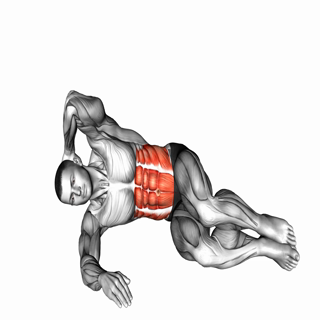
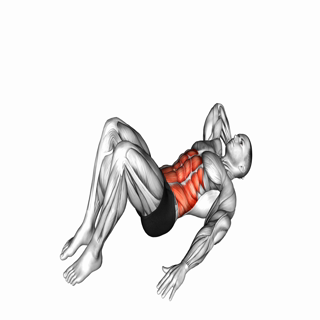
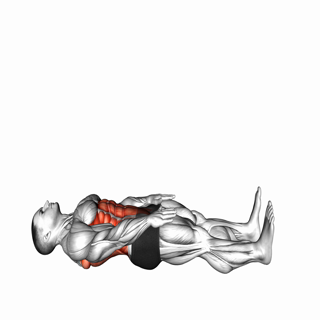
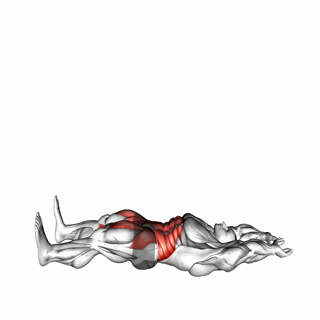
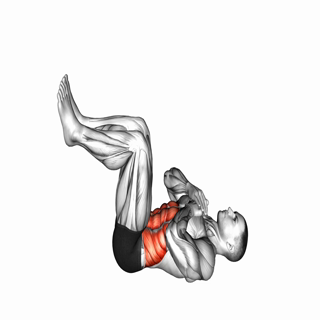
The crunch is the basic abdominal exercise where you round your back and bring your ribcage toward your pelvis. It targets the rectus abdominis, with the obliques assisting. Unlike the sit-up, the hips stay still, so the hip flexors do not take the work away from your abs.
- Primary muscle
- Abs
- Equipment
- Bodyweight, Cable, Machine, Other
- Variations
- 14 exercise pages
Crunch: variations and what they target
The variations differ in whether the upper body or the pelvis moves and whether resistance comes from bodyweight, a cable or a machine. With added load you can train your abs like any other muscle.
- Tuck CrunchThe basic crunch on the floor with knees bent. No equipment needed, and it is a good way to learn to round your back with your abs.
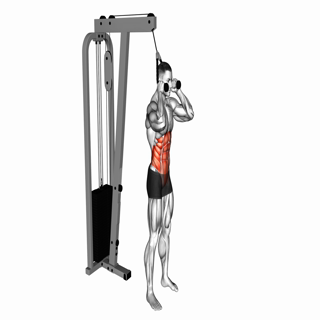
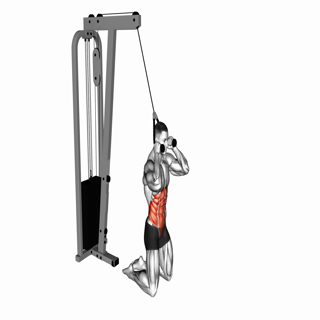 Cable CrunchKneeling with a cable rope. The load can go heavy and you can add it in small steps, so your progress is easy to track.
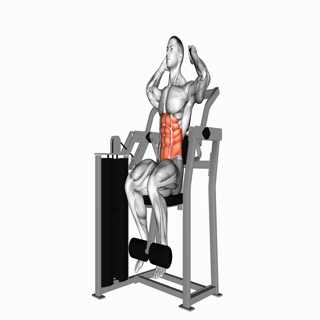
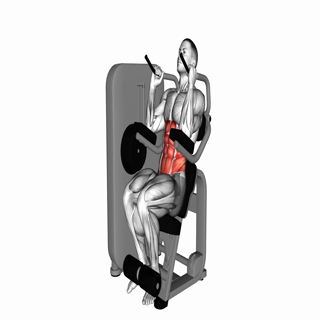 Lever Seated CrunchSeated in a machine. The machine guides the path and supports your back, so the movement is easy to do right even with heavy weight.
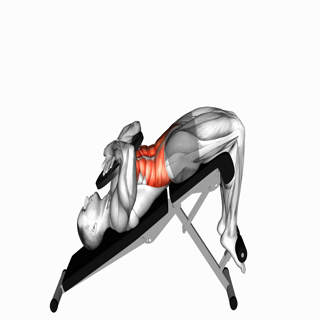
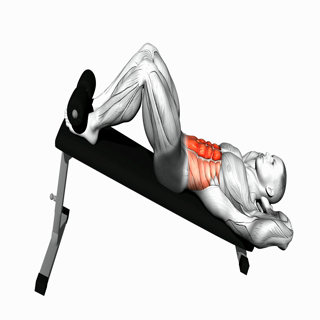 Decline CrunchOn a decline bench. The range lengthens, and your upper body weight makes it harder than on the floor. You can hold extra weight on your chest.
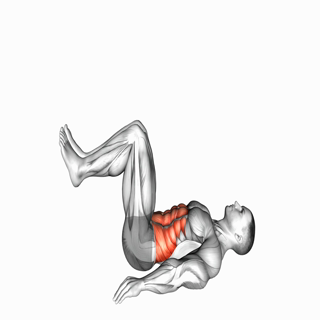 Reverse CrunchIn the reverse crunch your pelvis lifts toward your chest. Emphasises the lower abs and is easier on the neck for many.
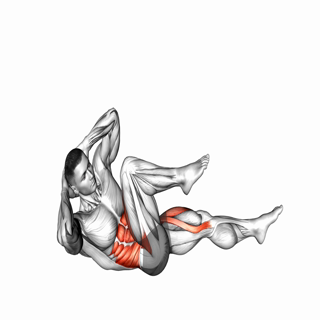 Bicycle CrunchIn the bicycle crunch the opposite elbow and knee meet in turn. Loads the obliques as well as the rectus abdominis.
Sets and reps by goal
These are the numbers SisuLift uses when it programs this exercise. Sets come from the app's program templates and reps from the range inside which the app increases the weight.
| Goal | Sets | Reps | Effort | Rest |
|---|---|---|---|---|
| Strength | 2–3 | 8–12 | RPE 8–9 | 1.5 min |
| Muscle growth | 3 | 10–15 | RPE 7–8 | 1.5 min |
| General fitness and fat loss | 3 | 10–15 | RPE 7–8 | 1.5 min |
RPE describes how hard a set is on a scale of 1–10. RPE 8 means you would still have about two reps left.
When every set reaches the top of the range, SisuLift raises the weight by one equipment step next time and the reps drop back to the bottom of the range. In a calorie deficit the range stays the same, because that is when you want to keep your loads.
Crunch in your program
The crunch fits the end of a session after the heavy lifts. Your abs keep your body stable in squats and deadlifts, so abs tired out at the start would weaken those lifts.
Around 6–12 direct sets a week is enough for most people's abs, and you can split them across two or three sessions. Pair the crunch with a hold, such as the plank, and hanging leg raises so your core is loaded from several directions.
Progress the same way as in other exercises. When your reps reach the top of the range easily, add load on the cable or machine. SisuLift tracks weights and reps in ab exercises too.
If your lower back feels tight in the floor crunch, put your feet up on a bench or do the reverse crunch. Your lower back should not lift off the floor, and pressing it lightly against the floor helps keep the movement in your abs.
Ab training does not replace full-body training, but it complements it. A strong core helps keep your back steady in heavy lifts and in everyday life.
Technique essentials
- Lie on your back with knees bent and feet flat on the floor. Your hands rest on your chest or lightly at your temples.
- Round your upper back and bring your ribs toward your pelvis until your shoulder blades lift off the floor. Breathe out as you do.
- Lower under control and start the next rep before your abs have time to relax.
Most common mistakes
Pulling on your neck. When your hands pull your head forward, the neck takes the load and the abs get little. Keep a fist's width between chin and chest and your hands lightly at the sides of your head or on your chest.
The movement comes from the hips, not the abs. If you sit up with a straight back, the hip flexors do the work. Think of rounding your back one vertebra at a time, and stop when your shoulder blades lift.
Too fast a pace. When crunches are done with momentum, the movement turns into swinging and the abs get less work. Do every rep under control and pause briefly at the top, so even fewer reps feel hard.
Frequently asked
What muscles do crunches work?
The rectus abdominis, which rounds the back and brings the ribcage toward the pelvis. The obliques assist, and in bicycle and oblique crunches they work more. The transverse abdominis keeps the belly tight, but planks and other holds load it better.
How many crunches should you do?
For muscle growth 3 sets of 10–15 reps, adding load as the exercise gets easier. Sets of hundreds of reps build endurance but do not grow the abs any more. When over 20 reps feel easy, move to a cable, machine or added weight.
Can you train abs every day?
You can, but it is not necessary. The abs recover like other muscles, and two to four hard sessions a week are enough. If you train every day, keep the sets light. Your abs also work in squats, deadlifts and overhead presses.
Will crunches give you a six-pack?
Crunches grow the abs, but visible abs also require a low body fat percentage. You cannot burn fat locally, so belly fat goes down with a calorie deficit and overall activity. Ab training makes the muscles more visible once there is less fat.
Why do crunches hurt my neck?
Usually because your hands pull on your head or your chin drops to your chest. Look diagonally up, keep the tip of your tongue on the roof of your mouth and your hands on your chest. If your neck still tires, try reverse crunches or cable crunches, where the head stays still.
Crunch or sit-up?
In the crunch only your upper back lifts, and the rectus abdominis does the work. In the sit-up you come all the way up, so the hip flexors do much of the movement. For building the abs the crunch is more targeted, while the sit-up works as an endurance test.
Crunch: all variations (14)
- Tuck CrunchBodyweight
- Cable CrunchCable
- Cable Standing Crunch (with rope attachment)Cable
- Lever Seated CrunchMachine
- Crunch MachineMachine
- Decline CrunchBodyweight
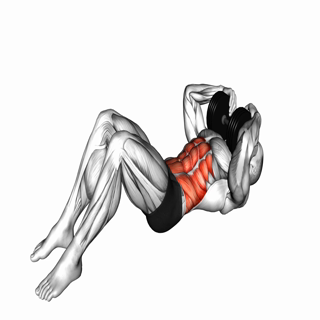
- Weighted decline crunchOther
- Weighted Crunch (VERSION 2)Other
- Reverse CrunchBodyweight
- Bicycle CrunchBodyweight
- Oblique Crunches FloorBodyweight
- Alternate Oblique CrunchBodyweight
- Arms Overhead Full Sit-upBodyweight
- V-upBodyweight