

Exercises · Shoulders · Updated
Overhead press
The overhead press is a basic shoulder exercise where you press a barbell or dumbbells from shoulder height straight overhead. The front delts and triceps do most of the work, with the side delts and upper back assisting. Standing, it is also a core exercise, while seated you can load the shoulders more precisely. It is also a good measure of upper body strength, because no bench or leg drive helps the lift.
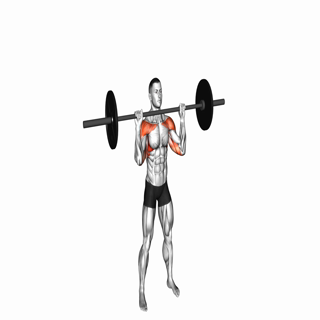
- Primary muscle
- Shoulders
- Assisting muscles
- Triceps
- Equipment
- Barbell, Dumbbell, Machine, Smith machine, Cable
- Variations
- 13 exercise pages
Overhead press: variations and what they target
The variations differ in equipment and position. Standing with a barbell you lift the heaviest, seated and on a machine you can tire the shoulders more safely.
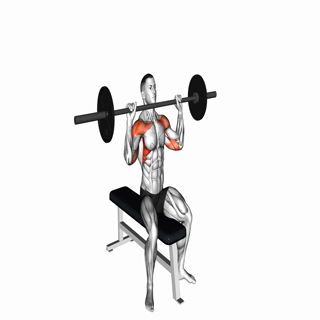
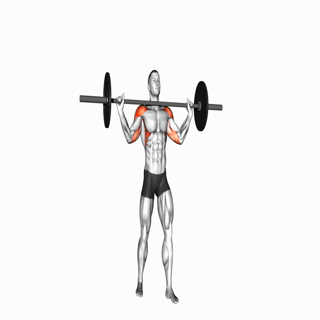
- Barbell Overhead PressThe base version. The bar starts on the collarbones and travels close to your face. The whole body supports the lift, so it also builds the core.
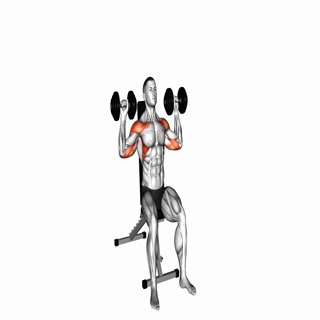 Seated Dumbbell PressThe backrest supports you, so the shoulders do the work without help from the body. Dumbbells give the elbows a free path, which suits many shoulders better than a barbell.
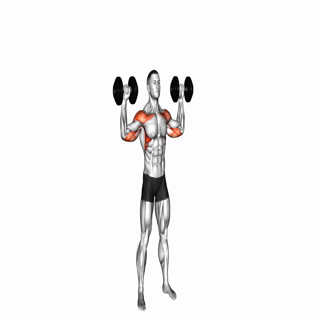
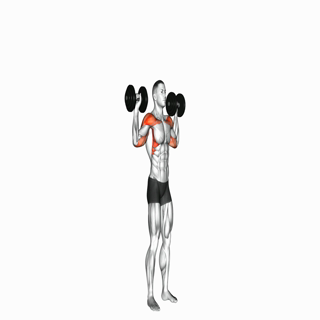 Dumbbell Overhead PressStanding with dumbbells each arm does its own work and the core holds the position. A good way to find and even out side-to-side differences.
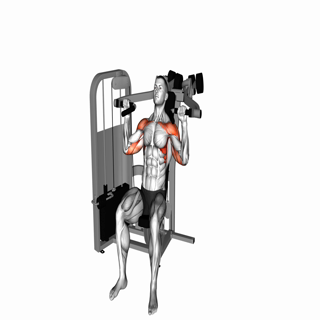 Lever Seated Shoulder PressThe machine guides the path, so the movement is easy to learn and you can take a set close to failure safely. Works well as an accessory.
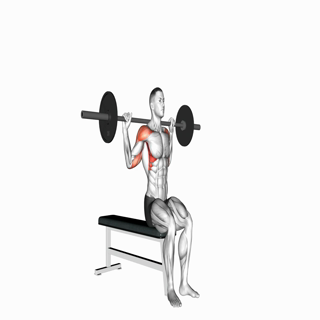 Barbell Seated Behind Head Military PressThe bar is lowered behind the head. It needs good shoulder mobility and brings no advantage over the regular press for most people. Only do it if your shoulders allow it without pain.
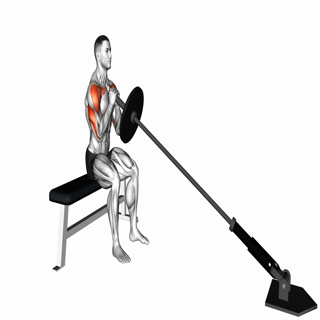 Landmine Seated Shoulder PressOne end of the bar is fixed to the floor and you press at an angle. The path is easier on the shoulders, so it suits you if pressing straight overhead irritates your shoulder.
Sets and reps by goal
These are the numbers SisuLift uses when it programs this exercise. Sets come from the app's program templates and reps from the range inside which the app increases the weight.
| Goal | Sets | Reps | Effort | Rest |
|---|---|---|---|---|
| Strength | 3–4 | 4–6 | RPE 8–9 | 2.5 min |
| Muscle growth | 3–4 | 8–12 | RPE 7–8 | 2.5 min |
| General fitness and fat loss | 3–4 | 8–12 | RPE 7–8 | 2.5 min |
RPE describes how hard a set is on a scale of 1–10. RPE 8 means you would still have about two reps left.
When every set reaches the top of the range, SisuLift raises the weight by one equipment step next time and the reps drop back to the bottom of the range. In a calorie deficit the range stays the same, because that is when you want to keep your loads.
Overhead press in your program
The overhead press fits at the start of an upper body workout, either as the main exercise or as a second press after the bench press. If you do both on the same day, do the heavier one first and the other as a lighter variation, such as a seated dumbbell press. A good pulling partner is the lat pulldown or the bent-over row.
The front delts also get plenty of work from the bench press, so for most people one or two overhead press exercises a week is enough. Add lateral raises and face pulls separately for the side and rear delts, because the press loads them less.
In the overhead press the weight goes up more slowly than in the squat or the bench, because smaller muscles do the work. Small weight steps help: if your gym has 1.25 kg plates or light dumbbells, use them. SisuLift takes your gym's equipment into account when it suggests weight steps.
Technique essentials
- Grip slightly wider than your shoulders, keep your wrists straight and your elbows under the bar. Squeeze your glutes and brace your abs before the lift.
- Press straight up and move your head slightly back out of the way. At the top the bar is over mid-foot and your head is between your arms.
- Lower the bar under control back onto your collarbones. Breathe at the top or before the next rep.
Most common mistakes
Arching the lower back hard to get the bar up. The movement then turns into something like an incline press and loads the lower back. Squeeze your glutes and core and lighten the weight until your body stays straight.
Moving the bar in an arc in front of your face. When the bar travels far forward, the shoulders work at a poor lever and the weight feels heavier. Move your head back for a moment and press straight up, so the bar takes the shortest path.
Frequently asked
What muscles does the overhead press work?
Mostly the front of the deltoid, the front delt, and the triceps. The side delts, upper traps and serratus anterior assist and move the shoulder blades. Standing, the core and glutes keep the body straight. The rear delts get less work, so they are worth training separately.
What is the overhead press called in Finnish?
In Finnish the overhead press is pystypunnerrus. The standing barbell version is also known in English as OHP, military press and shoulder press. The dumbbell version is the dumbbell shoulder press and the machine version the machine shoulder press. They are all variations of the same press.
Seated or standing, barbell or dumbbells?
Standing with a barbell you lift the heaviest and train your core at the same time. Seated, the backrest removes help from the body, so the shoulders tire more precisely. Dumbbells give the elbows a freer path and reveal side-to-side differences, while the barbell allows smoother progression. A workable setup is one heavy variation early in the workout and a lighter one as an accessory.
How do you do a behind-the-neck press, and who is it for?
Sit upright, lower the bar under control behind your neck to ear level and press straight up. It needs good shoulder external rotation and upper back extension. If your shoulder pinches or your mobility isn't enough, do the regular overhead press in front. It loads the same muscles without the extra risk.
Why does the overhead press hurt my shoulder?
The most common reasons are too much weight, flaring the elbows out to the sides and arching the lower back. Try a narrower grip, dumbbells with a neutral grip or the landmine press, whose path is easier on the shoulder. If the pain continues even with a light weight or is there at rest, take a break and see a physiotherapist.
Overhead press: all variations (13)
- Barbell Overhead PressBarbell
- Dumbbell Overhead PressDumbbell
- Seated Dumbbell PressDumbbell
- Barbell Seated Overhead PressBarbell
- Lever Seated Shoulder PressMachine
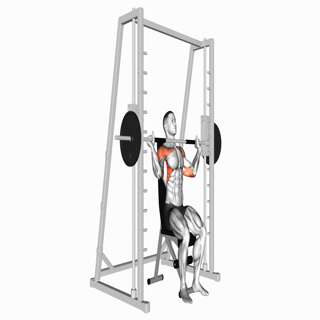
- Smith Shoulder PressSmith machine
- Barbell Standing Wide Military PressBarbell
- Barbell Seated Behind Head Military PressBarbell
- Dumbbell Alternate Shoulder PressDumbbell
- Landmine Seated Shoulder PressBarbell
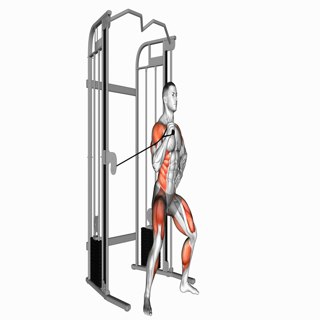
- Cable twisting overhead pressCable
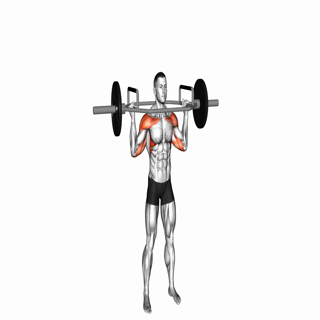
- Multi-grip bar overhead pressBarbell
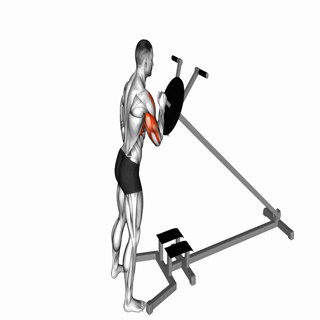
- Lever One Arm Shoulder Press (plate loaded)Machine