


Exercises · Shoulders · Updated
Lateral raise
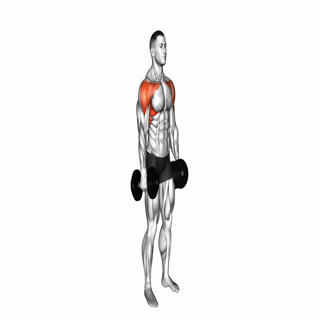
The lateral raise is a shoulder isolation exercise where you raise dumbbells or cable handles out to the sides up to shoulder height. It targets the middle part of the deltoid, which makes the shoulders look wide, and no press loads it as well. That is why almost every muscle-building programme includes some version of the lateral raise.
- Primary muscle
- Shoulders
- Equipment
- Dumbbell, Cable, Machine
- Variations
- 8 exercise pages
Lateral raise: variations and what they target
The variations differ in where the load is heaviest. With dumbbells it peaks at the top, while a cable keeps the tension more even throughout the range of motion.
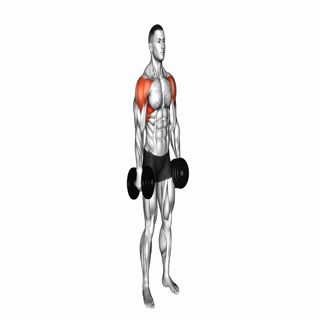
- Dumbbell Lateral RaiseThe standard version. Easy to do anywhere, and the load is heaviest at the top. Small weight jumps matter, because the lift does not tolerate big ones.
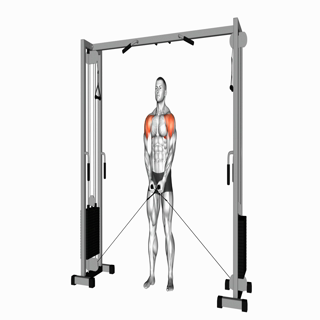 Cable Lateral RaiseWith a cable the resistance starts right at the bottom, so the side delt works through the whole movement. Many feel it better than with dumbbells.
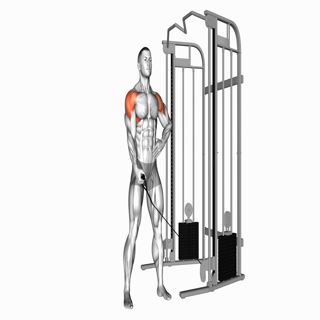 Cable One Arm Lateral RaiseOne arm at a time beside the cable. You can hold a support with the other hand and focus on the path. Good for fixing side-to-side differences.
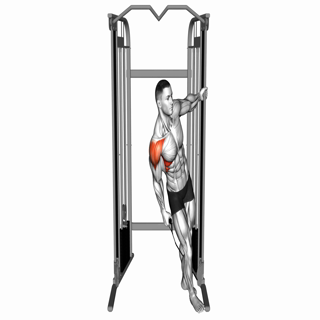 Cable Leaning Lateral RaiseYou lean sideways against a support, which lengthens the range and stretches the side delt at the bottom. The load is lighter, but the effect is strong.
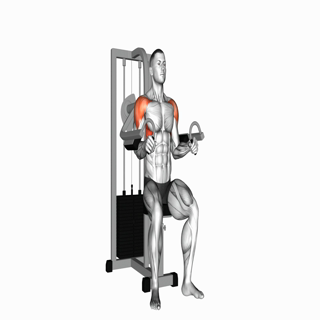 Lever Lateral RaiseThe lateral raise machine guides the path, and you can add load without swinging. Good as the last exercise when the shoulders are already tired.
- Lateral Raise 1.5 RepsWith 1.5 reps you do the bottom half of each rep twice. Time under tension grows, and even a lighter weight makes a hard set.
Sets and reps by goal
These are the numbers SisuLift uses when it programs this exercise. Sets come from the app's program templates and reps from the range inside which the app increases the weight.
| Goal | Sets | Reps | Effort | Rest |
|---|---|---|---|---|
| Strength | 2–3 | 8–12 | RPE 8–9 | 1.5 min |
| Muscle growth | 3 | 10–15 | RPE 7–8 | 1.5 min |
| General fitness and fat loss | 3 | 10–15 | RPE 7–8 | 1.5 min |
RPE describes how hard a set is on a scale of 1–10. RPE 8 means you would still have about two reps left.
When every set reaches the top of the range, SisuLift raises the weight by one equipment step next time and the reps drop back to the bottom of the range. In a calorie deficit the range stays the same, because that is when you want to keep your loads.
Lateral raise in your program
The lateral raise fits the end of a shoulder or upper-body session after the presses. Because the overhead press loads the front delt more, the lateral raise complements it rather than replaces it.
Around 8–16 direct sets a week is enough for most people's shoulders, and the side delt recovers quickly. Split the sets across two or three sessions. SisuLift raises the weight in small steps when every set reaches the top of the range, so it is worth saving your gym's dumbbell increments in your training location.
If your shoulder does not tolerate dumbbells, switch to a cable or machine before dropping the exercise altogether. The tension is more even, and many can train pain-free with them.
Technique essentials
- Stand with feet hip-width apart, arms at your sides and elbows slightly bent. Lean your upper body slightly forward.
- Raise the dumbbells out to the sides, leading with your elbows, until your upper arms are roughly horizontal.
- Lower under control for about two seconds and start the next rep before the weights rest against your thighs.
Most common mistakes
Too much weight and swinging. When you lift with your hips and back, the work shifts to the traps and the side delt gets little. Choose a weight you can lift for 10–15 reps without body movement. In the lateral raise a light weight is the right weight.
Shrugging the shoulders up to the ears. When you raise your shoulders while lifting your arms, the traps take over and the neck tightens. Keep the shoulders down and think of moving the dumbbells far out to the sides rather than up.
Too short a lowering phase. When you let the dumbbells drop under gravity, half of every rep is wasted. Lower for about two seconds and stop before your hands touch your thighs, so tension stays on the shoulder throughout the set.
Frequently asked
What muscles does the lateral raise work?
The middle part of the deltoid, the side delt, which gives the shoulders width. The front delt and upper traps assist, especially if you raise your arms above horizontal. The rotator cuff muscles stabilise the shoulder joint throughout the movement.
How high should you raise in a lateral raise?
Roughly to shoulder height, when your upper arms are horizontal. Going higher shifts work to the traps. It is not dangerous, but the side delt gains little from it. Controlling the lowering phase and keeping the shoulders down matter more.
How heavy should the dumbbells be for lateral raises?
Lighter than many think. Choose a weight you can lift for 10–15 reps without swinging your body or shrugging. The lateral raise is a lever movement, so even a small increase feels big. Add weight only when every set reaches the top of the range cleanly.
Cable or dumbbells for lateral raises?
Both build the side delt. A cable starts the tension right at the bottom and keeps it more even, while dumbbells peak at the top and can be used anywhere. A good combination is dumbbells for the heavier sets and a cable or machine to finish.
Why do lateral raises hurt my shoulder?
Often the cause is too much weight, raising well above horizontal or rotating the upper arm inward with thumbs down. Try a lighter weight, thumbs slightly up and arms a little in front of your body. Muscle fatigue is normal, sharp pain is not. Reduce the load, and if the pain continues, see a physiotherapist.
How many sets and reps of lateral raises?
For muscle growth 3 sets of 10–15 reps, with about 1.5 minutes of rest between sets. The side delt recovers quickly, so you can train it two or three times a week. The lateral raise does not need heavy strength sets, because the lift cannot handle big loads.