

Exercises · Back · Updated
Lat pulldown
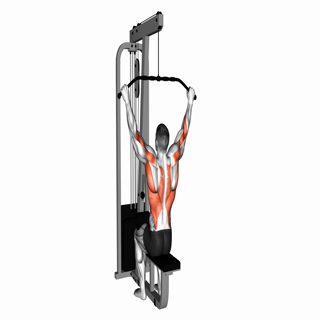
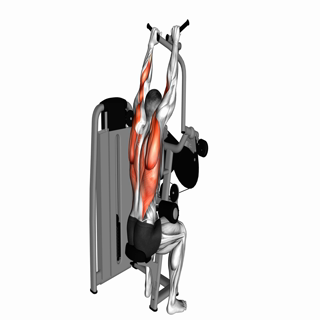
The lat pulldown is a basic back exercise where you sit and pull a bar or handle from overhead down towards your chest. The latissimus dorsi does most of the work, with the biceps, rear delts and shoulder blade muscles assisting. Grip changes the emphasis less than many think: full range of motion and a controlled return matter most.
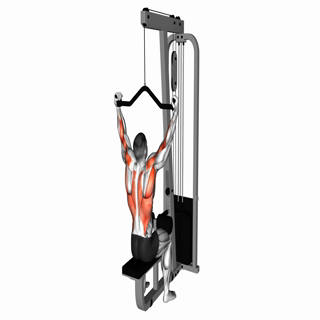
- Primary muscle
- Back
- Assisting muscles
- Biceps, Forearm
- Equipment
- Cable, Machine
- Variations
- 8 exercise pages
Lat pulldown: variations and what they target
Every variation loads the lats. The differences come from the grip, the path of the elbows and how much the biceps get involved.
- Wide Grip Lat PulldownOverhand grip wider than the shoulders. The classic version, emphasising the lats and pulling the shoulder blades down. Don't take the grip all the way to the ends of the bar, as the range of motion gets shorter.
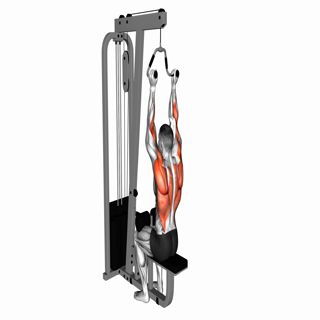 Cable Neutral Grip Lat PulldownPalms facing each other. A shoulder-friendly grip that lets most people pull a little more weight over a longer range of motion.
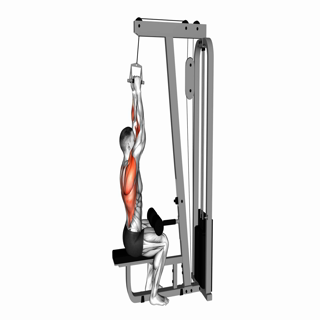 Cable Lat Pulldown with V-barClose neutral grip with a V-handle. The elbows travel close to the sides, the range of motion is long and many feel it in the lower lats.
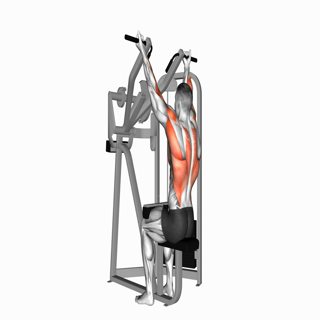 Underhand Lat Pulldown machineUnderhand grip with palms facing you. The biceps do more work, so the weight goes up more easily. A good prep exercise if your goal is a chin-up.
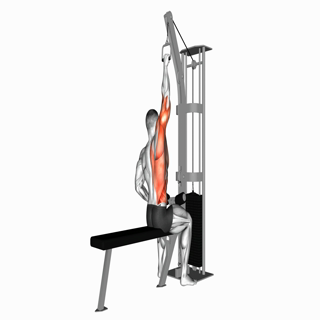 Cable one arm lat pulldownOne arm at a time. Side-to-side differences are easy to spot, and you can lean so the elbow pulls straight down to your side.
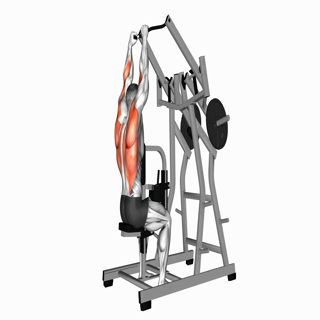 Lever Lat Pulldown (plate loaded)Plate-loaded machine where the handles move on a fixed path. Stable and easy to learn, and you can load it heavy without your body lifting off the seat.
Sets and reps by goal
These are the numbers SisuLift uses when it programs this exercise. Sets come from the app's program templates and reps from the range inside which the app increases the weight.
| Goal | Sets | Reps | Effort | Rest |
|---|---|---|---|---|
| Strength | 3–4 | 4–6 | RPE 8–9 | 2.5 min |
| Muscle growth | 3–4 | 8–12 | RPE 7–8 | 2.5 min |
| General fitness and fat loss | 3–4 | 8–12 | RPE 7–8 | 2.5 min |
RPE describes how hard a set is on a scale of 1–10. RPE 8 means you would still have about two reps left.
When every set reaches the top of the range, SisuLift raises the weight by one equipment step next time and the reps drop back to the bottom of the range. In a calorie deficit the range stays the same, because that is when you want to keep your loads.
Lat pulldown in your program
The lat pulldown fits early in a workout as the main back exercise, or after pull-ups as a second pulling exercise. In an upper body workout it pairs well with the overhead press, because the two load opposite directions. In a full body program one lat pulldown and one row cover the upper back well.
For most people about 10–20 sets a week for the back is enough, split over two or three workouts, and the lat pulldown can be three to four of those sets per session. If you can already do pull-ups, alternate the two weekly or do lat pulldowns after pull-ups at higher reps.
Keep the same variation in your program for several weeks so you can see progress in the weights. When the weights stall for several weeks, switching the grip, for example from wide to neutral, gives a new stimulus. SisuLift tracks the weights for each variation separately, so switching doesn't mess up your history.
Technique essentials
- Set the thigh pad so your thighs lock under it and your body doesn't lift off during a heavy set.
- Start the pull by driving the shoulder blades down, then the elbows towards your sides. The bar comes to between your chin and upper chest.
- Return the bar under control until your arms are straight and your shoulder blades rise. The stretch at the top is part of the movement.
Most common mistakes
Swinging the torso back and yanking the bar down. When you lean far back, the movement turns into a row and the back does less work. Lighten the weight if you can't pause the bar briefly at the bottom.
Too short a range of motion at the top. If you don't let your arms straighten and your shoulder blades rise, the lats never reach the stretched position where they grow well. With too much weight, the movement is often cut short exactly at the top.
Frequently asked
What muscles does the lat pulldown work?
The main muscle is the latissimus dorsi. The teres major, biceps, brachialis, rear delts and the trapezius and rhomboids between the shoulder blades assist, and the forearms hold the grip. That makes the lat pulldown a good all-round exercise for the upper back, and it also helps you learn the pull-up.
What does the wide-grip lat pulldown target?
A wide grip emphasises the lats and the downward pull of the shoulder blades, and the biceps do less than with an underhand or close grip. In studies the difference to other grips is still small. A grip about one and a half times shoulder width works for most people. A very wide grip shortens the range of motion.
What does the close-grip lat pulldown target?
A close grip, for example with a V-handle or a neutral grip, lengthens the range of motion and brings the elbows closer to the sides. The lats still do the main work, but the biceps and brachialis contribute more. Many people can pull more weight with a close grip, so it suits heavier sets.
What is the difference between the lat pulldown and the seated cable row?
In the lat pulldown you pull from overhead downwards, a vertical pull like the pull-up. In the seated cable row you pull horizontally towards your torso. The pulldown emphasises the lats, the row more the area between the shoulder blades and the rear delts. A balanced program usually includes both.
What can replace the lat pulldown?
The pull-up is the closest substitute, and an assisted pull-up or a band makes it easier. Without a cable machine, band pulldowns, ring rows and dumbbell rows work. They aren't exactly the same movement, but they load the same pulling muscles.
Why do I feel the lat pulldown in my biceps?
The biceps assist the movement, so some feeling there is normal. If you mostly feel it in your arms, start the pull by driving the shoulder blades down, think about pulling your elbows towards your pockets and loosen your grip so your fingers act as hooks. An overhand grip involves the biceps less than an underhand grip.