


Exercises · Muscle group · Updated
Calf exercises
Calf exercises train the gastrocnemius and the soleus underneath it, which point the foot and lift the heel. Standing calf raises load the gastrocnemius more, and seated calf raises the soleus. Calves grow slowly, but they do grow when the range of motion is full.
- Exercises
- 9 exercise pages
- Most common equipment
- Bodyweight, Machine, Sled
- Most logged exercise
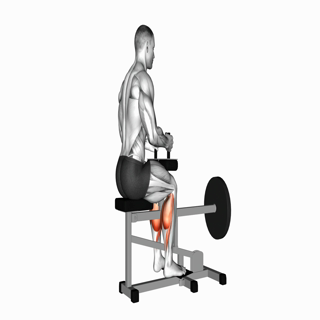
- Lever Seated Calf Raise
Calf muscles: what calf exercises train
- Gastrocnemius (gastrocnemius)
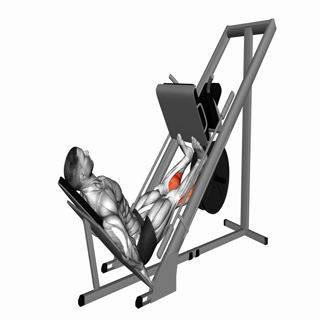
- The visible two-headed calf muscle crosses the knee. It works most when the knee is straight, in standing calf raises and calf raises on the leg press.
- Soleus (soleus)
- The broad muscle under the gastrocnemius does not cross the knee, so it does the main work when the knee is bent, as in seated calf raises. It carries a large share of the load in walking and running.
- Tibialis anterior (tibialis anterior)
- The muscle at the front of the shin lifts the foot upward. It is not part of the calf, but training it balances the calf and can help runners. Tibialis raises against a wall train it.
Most-logged calf exercises among SisuLift users
The order comes from how many SisuLift users have logged sets of each exercise. It includes exercises that have a guide page in the exercise library, and it updates as people log their workouts.
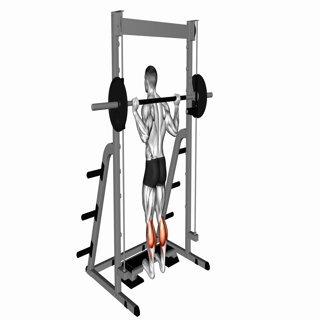
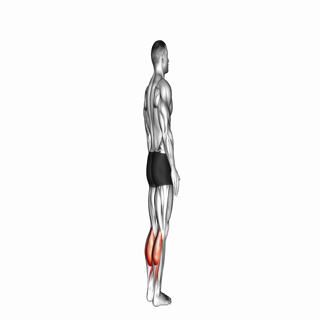
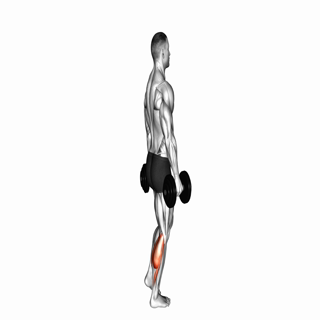
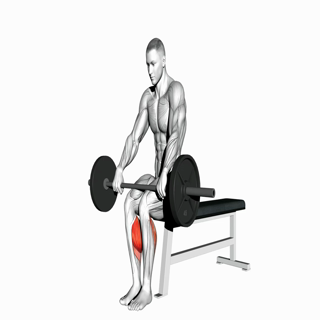
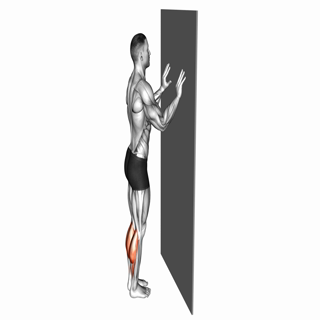
How to train your calves
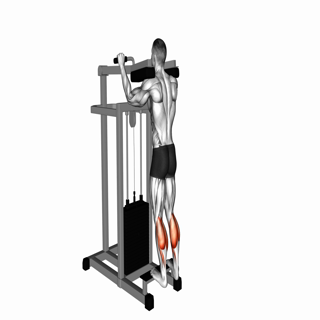
Every week, do both standing and seated calf raises. Lower your heel all the way, pause in the stretched bottom position and rise onto your toes as high as you can. The Achilles tendon works like a spring, so bouncing shifts the work to the tendon instead of the muscle.
Calves tolerate a lot of reps and recover quickly. A heavy load for 8–15 reps works just as well as long sets, as long as the set gets close to failure and the range of motion is full.
How many weekly sets for the calves
These are the numbers SisuLift starts your weekly volume from before you have any training history. As your logs build up, the app moves the target based on how your strength develops. Only hard sets count: a direct exercise counts as one set, and an exercise where the muscle assists counts as half a set.
| Experience | Minimum | Target | Upper limit |
|---|---|---|---|
| Beginner | 5 sets | 9 sets | 14 sets |
| Intermediate | 7 sets | 12 sets | 17 sets |
| Advanced | 8 sets | 14 sets | 20 sets |
Minimum is the amount that usually still drives progress. Upper limit is the amount beyond which recovery usually starts to suffer. Split the weekly sets across two or three workouts.
Example workout from the most-logged exercises
The most-logged exercises from different exercise families, compound movements first. Sets, reps and rest are the same ones SisuLift uses for a muscle growth goal.
| Exercise | Sets | Reps | Rest |
|---|---|---|---|
| Lever Seated Calf Raise | 3 | 10–15 | 1.5 min |
| Lever Standing Calf Raise | 3 | 10–15 | 1.5 min |
| Dumbbell Standing Single Leg Calf Raise | 3 | 10–15 | 1.5 min |
| Tibialis Raise | 3 | 10–15 | 1.5 min |
Done twice a week, this adds up to 24–24 sets per week. The rep ranges are those for a muscle growth goal.
All calf exercises (9)
Every exercise with a guide page in the exercise library, grouped by equipment. The equipment heading takes you to all exercises for that equipment.
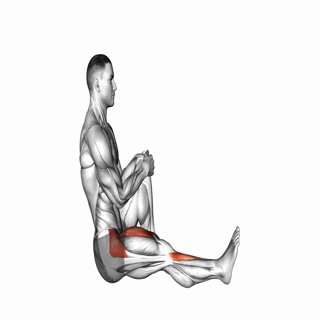
Sled1 exercise
Barbell1 exercise
Frequently asked
What is the best calf exercise?
The most-logged calf exercise among SisuLift users is Lever Seated Calf Raise. The best pair is a standing calf raise on a machine or Smith machine for the gastrocnemius and a seated calf raise for the soleus. A single-leg dumbbell calf raise works if there is no machine.
Standing or seated calf raises?
Both. Standing, the knee is straight and the gastrocnemius does the most work. Seated, the knee is bent, so the gastrocnemius is slack and the soleus does the main work. Calf size comes from both.
Why won't my calves grow?
The most common reasons are a short range of motion, bouncing and doing calves only occasionally at the end of a workout. Lower your heel all the way, pause at the bottom for a second and train calves two or three times a week. Genetics affect calf size a lot, but training grows everyone's calves.
How many sets for the calves per week?
At intermediate level SisuLift starts the calves at 12 sets per week, with a minimum of 7. For beginners the target is 9. Calves recover quickly, so you can split the sets over three workouts.
How do you train calves at home?
Single-leg calf raises off the edge of a stair go a long way, because your heel can drop all the way down. When 20 reps feel easy, hold a dumbbell or water jug and slow down the lowering. Calf raises against a wall help with balance.