

Exercises · Biceps · Updated
Biceps curl
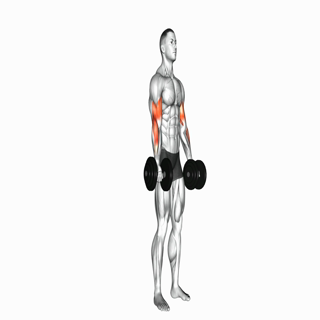
The biceps curl is the basic biceps exercise where you bend your elbow and lift the weight towards your shoulder. It builds the biceps brachii, with the brachialis and forearm muscles assisting. There are many variations because equipment, grip and upper arm position all shift the emphasis.
- Primary muscle
- Biceps
- Assisting muscles
- Forearm
- Equipment
- Dumbbell, Barbell, EZ bar, Cable, Machine, Bodyweight, Resistance band
- Variations
- 18 exercise pages
Biceps curl: variations and what they target
Every variation loads the biceps. Upper arm position decides how it feels: on the incline bench the biceps are stretched, on the Scott bench the movement is hardest at the start and on the cable the resistance stays more even through the whole range.
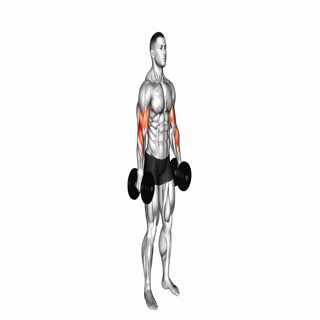
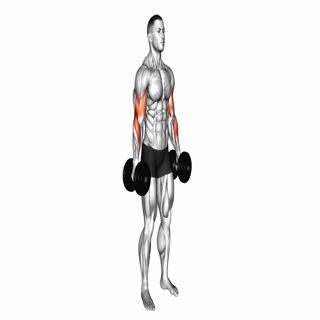
- Dumbbell Biceps CurlThe base version. With dumbbells the wrist can rotate during the lift and each arm does its own work. A good first biceps exercise.
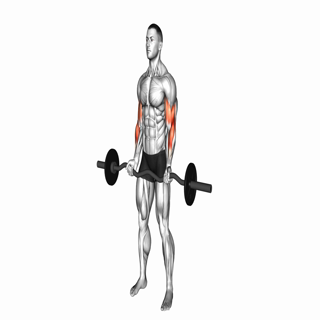
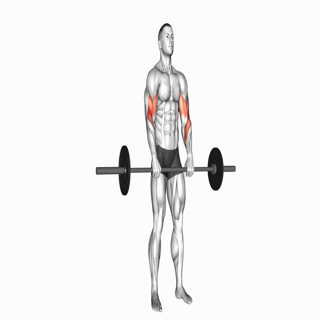
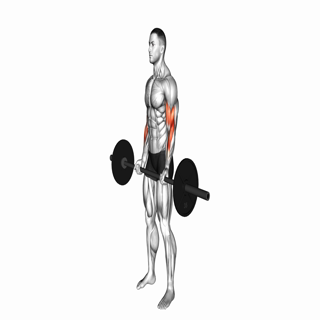
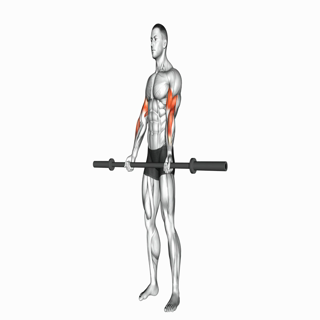 Barbell CurlWith a barbell both arms lift together, so you can load it the heaviest. A straight bar can bother the wrists, in which case the EZ bar is a better choice.
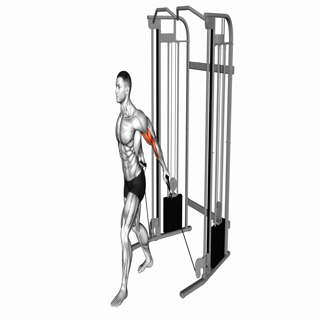
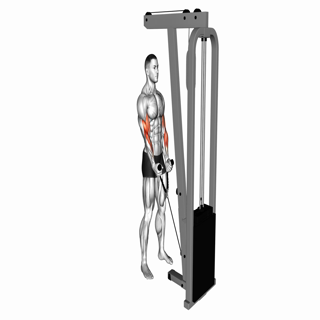
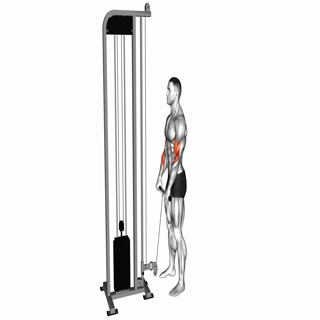
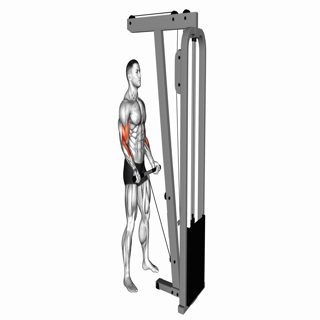 Cable CurlThe cable keeps the resistance more even through the whole range, including the top where a dumbbell gets lighter. Suits the end of a workout and higher reps.
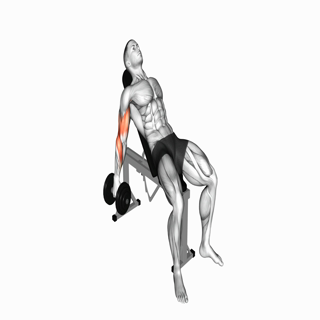 Incline Dumbbell CurlOn an incline bench the upper arm stays behind the body, so the biceps are in a stretched position. The weights are lighter, but you feel it strongly in the biceps.
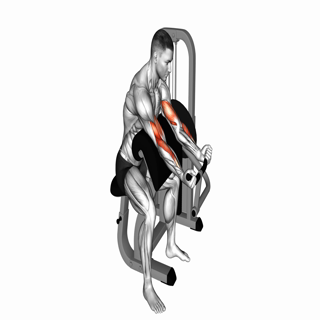
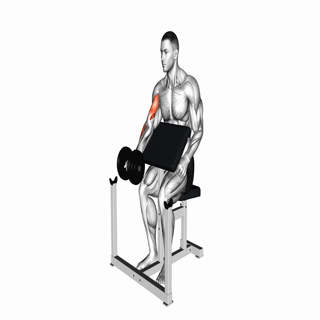
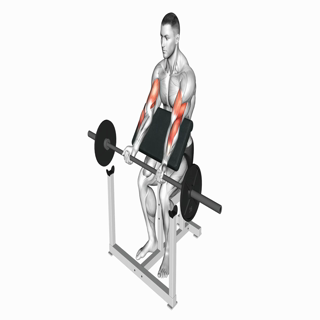 Barbell Preacher CurlThe Scott bench supports the upper arm, so swinging is impossible. The movement is hardest at the start, so don't let the weight drop into the bottom position.
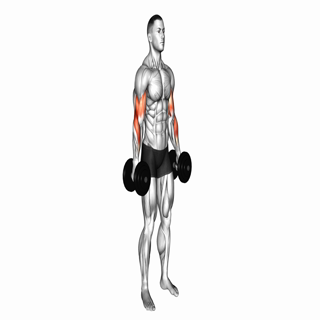 Dumbbell Hammer CurlPalms facing each other. Emphasises the brachialis and the brachioradialis in the forearm, which make the arm look thicker.
Sets and reps by goal
These are the numbers SisuLift uses when it programs this exercise. Sets come from the app's program templates and reps from the range inside which the app increases the weight.
| Goal | Sets | Reps | Effort | Rest |
|---|---|---|---|---|
| Strength | 2–3 | 8–12 | RPE 8–9 | 1.5 min |
| Muscle growth | 3 | 10–15 | RPE 7–8 | 1.5 min |
| General fitness and fat loss | 3 | 10–15 | RPE 7–8 | 1.5 min |
RPE describes how hard a set is on a scale of 1–10. RPE 8 means you would still have about two reps left.
When every set reaches the top of the range, SisuLift raises the weight by one equipment step next time and the reps drop back to the bottom of the range. In a calorie deficit the range stays the same, because that is when you want to keep your loads.
Biceps curl in your program
Biceps curls usually come near the end of a workout after the pulling exercises, because the biceps have already worked in rows and lat pulldowns. In an upper-lower split they fit at the end of the upper body day, in a push-pull-legs program on pull day. Supersetting them with a triceps exercise saves time.
The biceps handle high reps well, so sets of 10–15 reps work fine as long as you take them close to failure. Change the variation now and then, for example from barbell to incline bench or cable, so the biceps also get load in a stretched position.
Small muscles progress slowly in weight, so don't expect a new kilo every week. Adding reps at the same weight is progress too. SisuLift only raises the weight when every set reaches the top of the range, and it tracks the weights for each variation separately.
Technique essentials
- Stand tall and keep your elbows next to your sides. The upper arms stay still for the whole set.
- Lift the weight by bending the elbow until the biceps is fully contracted. Squeeze briefly at the top.
- Lower slowly until the arm is almost straight. The lowering is as important as the lift.
Most common mistakes
Swinging the body and lifting the elbows forward. The shoulders and back then do part of the work and the biceps get less. Lighten the weight so you can do the set with your back against a wall.
Dropping the weight down quickly. The lowering builds muscle just like the lift, and an uncontrolled lowering strains the elbow. Lower the weight in about two seconds and keep the tension until your arm is almost straight.
Frequently asked
Where should you feel the biceps curl?
On the front of the upper arm, in the middle of the biceps and often near the crook of the elbow. You also feel it in the forearms, because they hold the grip. If you mostly feel it in the front of the shoulders or the lower back, your elbows are moving or your body is swinging. Lighten the weight and keep the upper arms still.
What muscles does the biceps curl work?
The main muscle is the biceps brachii. Under it lies the brachialis, which bends the elbow together with the biceps and works hard especially with a hammer grip. The brachioradialis in the forearm assists. As the brachialis grows it pushes the biceps up, so training both shows in arm size.
Barbell, dumbbells or cable?
All of them grow the biceps when the sets are taken close to failure. With a barbell you lift the heaviest, with dumbbells each arm does its own work and the cable keeps the resistance even. A good combination is one heavier curl with a barbell or dumbbells and another in a stretched position, for example on an incline bench or as a Bayesian cable curl.
Can you train biceps every day?
You can, but it isn't necessary and usually isn't useful. The biceps also work in every pulling exercise, such as rows and pull-ups, so they need recovery. For most people two to three sessions a week and about 6–12 direct biceps sets in total is enough. If your elbow starts to ache, reduce the volume.
How fast do biceps grow?
For a beginner, growth often shows on the tape measure within a few months of regular training and enough protein. For experienced lifters growth slows down clearly. Muscle doesn't grow in days, so the key is progression, adding reps or weight week by week. That is why logging your sets helps.
Which is bigger, the biceps or the triceps?
The triceps. It makes up about two thirds of the upper arm's muscle mass, and the biceps the rest. If you want bigger arms, training the triceps adds more size than the biceps alone. The biceps are what people see from the front, though, so keep both in your program.
Biceps curl: all variations (18)
- Dumbbell Biceps CurlDumbbell
- Barbell CurlBarbell
- EZ Bar CurlEZ bar
- Cable CurlCable
- Incline Dumbbell CurlDumbbell
- Dumbbell Hammer CurlDumbbell
- Bayesian CurlCable
- Barbell Preacher CurlBarbell
- Lever Preacher CurlMachine
- Dumbbell Preacher CurlDumbbell
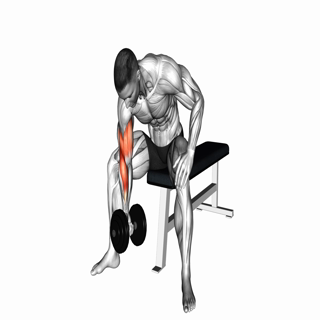
- Dumbbell Concentration CurlDumbbell
- Dumbbell Alternate Biceps CurlDumbbell
- Dumbbell Hammer Curl (version 2)Dumbbell
- Cable Hammer Curl (with rope)Cable
- Barbell Reverse CurlBarbell
- Cable Standing Reverse Grip Curl (Straight bar)Cable
- Cheat CurlBodyweight
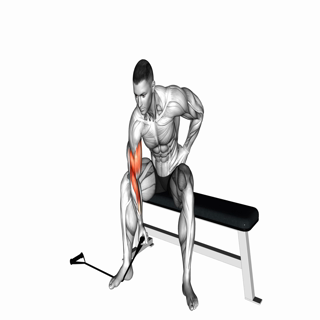
- Band Concentration CurlResistance band