



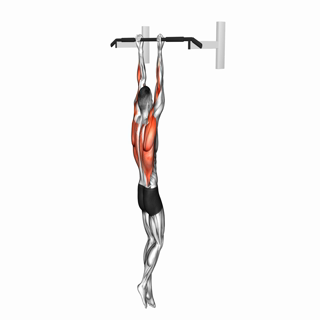
Pull-up
Pull ups build your lats, upper back and biceps. They improve pulling strength that carries over to many lifts and everyday lifting.
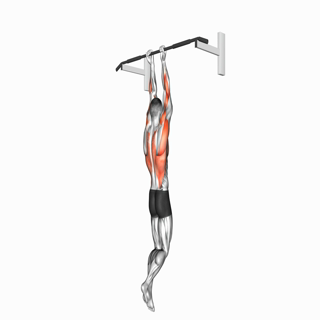
Muscles worked
§ 01 · MusclesHow to perform
§ 02 · Steps- 01
Hang from the bar with a shoulder-width overhand grip, palms facing forward, and your legs crossed or slightly bent.
- 02
Brace your core and pull your shoulder blades back and down before starting the pull.
- 03
Pull yourself up by driving your elbows down and slightly back until your chin clears the bar.
- 04
Pause briefly at the top without letting your shoulders rise toward your ears.
- 05
Lower yourself under control to a full hang, fully extending your elbows while maintaining shoulder blade control throughout the movement.
Beginner's guide
§ 03 · GuidePull ups build your lats, upper back and biceps. They improve pulling strength that carries over to many lifts and everyday lifting.
You should feel the work in your lats and upper back. It should not be mostly in your hands, biceps or shoulders.
A common mistake is using momentum and skipping shoulder blade control. Start each rep by pulling your shoulder blades down, then pull smoothly.
How to get started at the gym
§ 04 · SisuLiftPull-up is ready to go in the SisuLift exercise library. The app builds you a program, suggests starting weights and shows this same animation during your workout at the gym.
- ·A ready training program based on your goal
- ·Starting weight suggestions and automatic progression
- ·Set logging and rest timer at the gym


Use ChatGPT? Add SisuLift there and ask for a training program or an exercise guide right in the chat. Open SisuLift in ChatGPT
Tips
§ 05 · TipsStart each rep by pulling your shoulder blades down and back; don't jerk your body to initiate the movement. Keep your chest up and avoid overextending your lower back.
A classic overhand-grip pull-up that effectively builds strength in your back, biceps, and core.
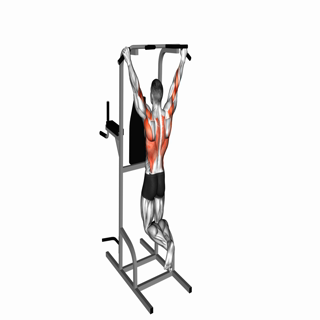
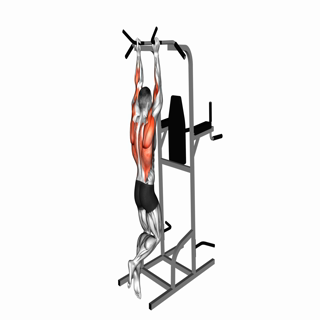
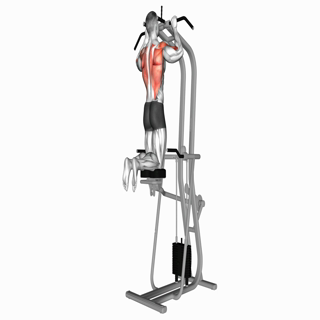
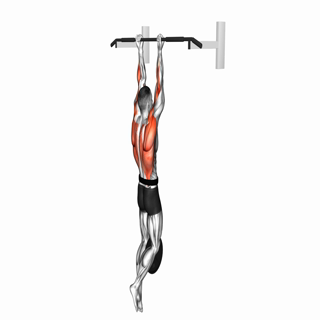
More exercises: Back
§ 06 · Same muscles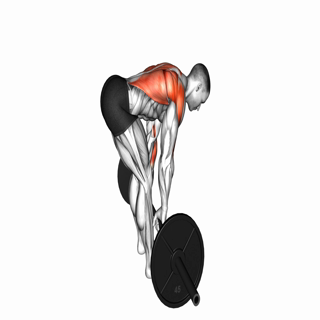
Ready to start?
Your next personal record is waiting.
No commitment. No card. 14 days, and you decide yourself if it fits.