

Exercises · Quadriceps · Updated
Goblet squat
The goblet squat is a squat where you hold a dumbbell or kettlebell in front of your chest like a goblet. The front load helps you keep your torso upright and squat deep, so it is the best first loaded squat and a useful accessory for experienced lifters too. It builds the quads, glutes and core.
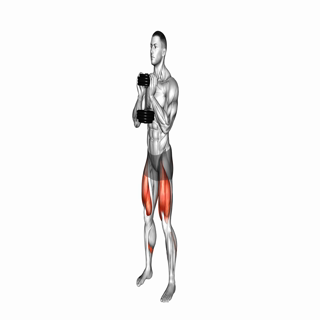
- Primary muscle
- Quadriceps
- Assisting muscles
- Glutes, Hamstrings
- Equipment
- Dumbbell, Kettlebell
- Variations
- 3 exercise pages
Goblet squat: variations and what they target
The movement stays the same whatever the equipment. The difference is how easy the weight is to hold and how heavy the load can get. Choose the one that lets you add load steadily from week to week.
- Dumbbell Goblet SquatThe dumbbell is held upright by the top end with both hands. Gyms have dumbbells in small increments, so it is easy to add load steadily week to week. The best choice if you want to progress in small steps.
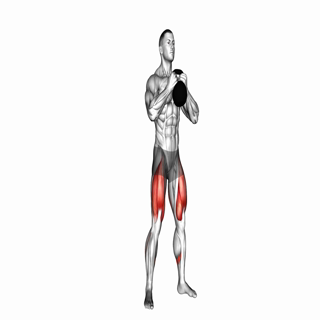 Kettlebell Goblet SquatThe kettlebell is held by the horns or the bell. The weight sits close to the chest and the grip is comfortable, but gym kettlebells often come in bigger jumps, so the steps are larger. A good choice for home training.
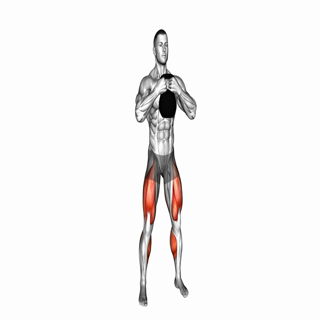 Kettlebell Goblet Squat MobilityA light goblet squat where you pause at the bottom and push the knees out with your elbows. For warm-ups and hip mobility, not for heavy loads. Also works for opening up stiff hips before a leg workout.
Sets and reps by goal
These are the numbers SisuLift uses when it programs this exercise. Sets come from the app's program templates and reps from the range inside which the app increases the weight.
| Goal | Sets | Reps | Effort | Rest |
|---|---|---|---|---|
| Strength | 3–4 | 4–6 | RPE 8–9 | 3 min |
| Muscle growth | 3–4 | 8–12 | RPE 7–8 | 3 min |
| General fitness and fat loss | 3–4 | 8–12 | RPE 7–8 | 3 min |
RPE describes how hard a set is on a scale of 1–10. RPE 8 means you would still have about two reps left.
When every set reaches the top of the range, SisuLift raises the weight by one equipment step next time and the reps drop back to the bottom of the range. In a calorie deficit the range stays the same, because that is when you want to keep your loads.
Goblet squat in your program
For a beginner the goblet squat can be the main exercise of leg day. For experienced lifters it works as a warm-up before the back squat or at the end of a leg workout at higher reps. Because the load is light, you can do it more often than a heavy squat, for example two to three times a week in a full body program.
Once you can do 15 controlled reps with the heaviest weight you can hold against your chest, progress starts to slow. That is the time to move on to the back squat, the front squat or the Bulgarian split squat, where you can keep adding load for longer. The goblet squat still stays a good warm-up and mobility exercise.
At home, one kettlebell or an adjustable dumbbell is enough for goblet squats. If the weight is too light, slow the lowering to three seconds or add a pause at the bottom, and the same weight feels heavier. SisuLift tracks the dumbbell and kettlebell versions separately.
Technique essentials
- Keep the weight tight against your chest with the elbows pointing down. If the weight drifts away from your chest, your upper back rounds.
- Place your feet shoulder width apart or slightly wider, toes out. Sit down between your feet, not backwards.
- At the bottom your elbows can touch the inside of your knees. Stand up by pushing the floor with your whole foot.
Most common mistakes
The weight hanging in your hands far from the body. Then the upper back tires before the legs and the torso tips forward. When the load gets so heavy you can't hold it against your chest, it is time to move on to the back squat or the Bulgarian split squat.
Heels lifting and weight on the balls of the feet at the bottom. The knees then take unnecessary load and your balance wobbles. Lower more slowly, keep your weight over the whole foot and try a slightly wider stance or a low plate under your heels if your ankles are stiff.
Frequently asked
What does goblet mean?
A goblet is a drinking cup or chalice. The name comes from the grip, because you hold the dumbbell or kettlebell in front of your chest like a goblet. The exercise was popularised by the American coach Dan John. In Finnish it is also called maljakyykky, but in gyms the name goblet squat is the most common.
What does the goblet squat target?
The quads and glutes, with the adductors working in the deep bottom position. Because the weight is in front, the core and upper back work to keep the torso upright. The load stays lighter than in the back squat, so the exercise builds the legs best for beginners or at higher reps.
Kettlebell or dumbbell?
Either works, since the movement is the same. Dumbbells usually come in more weights with smaller jumps, so progression is smoother. A kettlebell is comfortable to hold and suits home training. Choose the one you have in suitable weights. SisuLift tracks each separately, since they are different exercises in the app.
Is the goblet squat good for beginners?
Very much so. The front load works as a counterweight, so the right position is easier to find than with a barbell, and you can start with a light weight without a rack. Many beginners do goblet squats for the first few months and move on to the back squat when the dumbbell gets too heavy to hold.
How heavy should you start the goblet squat?
Choose a weight you can do 10–12 controlled reps with while still having a couple of reps left. Start too light rather than too heavy, because you learn the position with a light weight and there is time to add load quickly. Increase the weight when every set reaches the top of the range. SisuLift suggests a starting weight and raises it based on your logged sets.
Goblet squat or back squat?
You can lift much heavier in the back squat, so it is better for strength and total leg load. The goblet squat is easier to learn, puts less load on the back and works well as a warm-up and at high reps. They don't rule each other out, and the goblet squat is a good way to learn the squat position before the barbell.