


Exercises · Quadriceps · Updated
Back squat
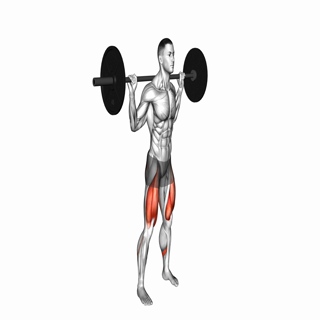
The back squat is a basic lower body exercise where the bar rests on your back and you squat with hips and knees bending as deep as you can control. It builds the quads, glutes and adductors, while the core and spinal erectors hold the position. In strength training it is hard to replace.
- Primary muscle
- Quadriceps
- Assisting muscles
- Glutes, Lower Back, Hamstrings
- Equipment
- Barbell, Smith machine
- Variations
- 6 exercise pages
Back squat: variations and what they target
The variations differ in bar position, depth and tempo. The high bar squat is the base version, and the others are tools for a specific need.
- Barbell Full Squat (Back POV)Bar on top of the traps. The torso stays more upright and the knees travel further forward, so the quads do much of the work. The base version for most people.
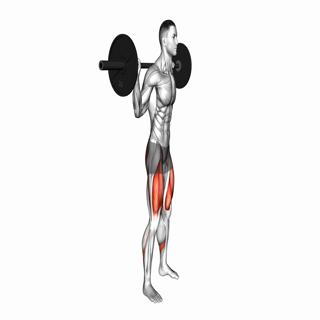 Barbell Low Bar SquatBar lower, across the rear delts. The torso leans further forward and the hips do more work, which lets many people lift heavier. Popular in powerlifting.
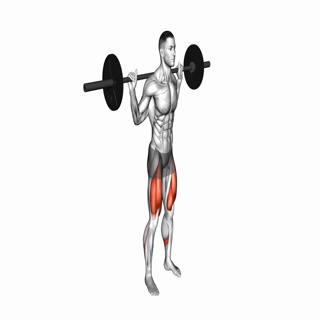 Barbell Squat 2 sec HoldA two-second pause at the bottom without bouncing. Teaches you to hold the position and strengthens the bottom of the squat. The weights are clearly lighter than in a regular squat.
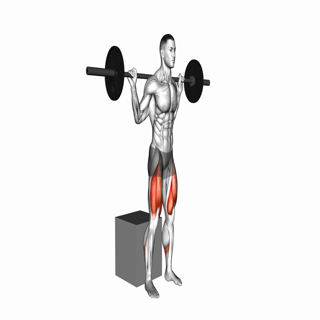 Barbell Box SquatYou squat down to a box or bench and stand up from it. The box standardises the depth, so it is an easy way to learn the right depth and how to use your hips.
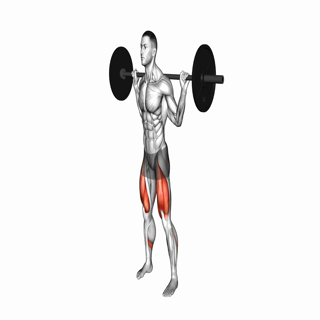 Barbell Full SquatA squat as deep as your mobility allows. The longer range of motion loads the quads, glutes and adductors in a stretched position, which supports muscle growth.
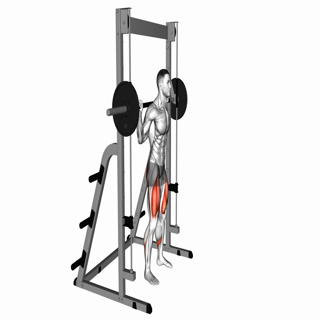 Smith Full SquatIn the Smith machine the bar runs on rails. Less balance is needed and you can place your feet slightly forward. A good accessory for the quads and for when you have no spotter.
Sets and reps by goal
These are the numbers SisuLift uses when it programs this exercise. Sets come from the app's program templates and reps from the range inside which the app increases the weight.
| Goal | Sets | Reps | Effort | Rest |
|---|---|---|---|---|
| Strength | 3–4 | 4–6 | RPE 8–9 | 3 min |
| Muscle growth | 3–4 | 8–12 | RPE 7–8 | 3 min |
| General fitness and fat loss | 3–4 | 8–12 | RPE 7–8 | 3 min |
RPE describes how hard a set is on a scale of 1–10. RPE 8 means you would still have about two reps left.
When every set reaches the top of the range, SisuLift raises the weight by one equipment step next time and the reps drop back to the bottom of the range. In a calorie deficit the range stays the same, because that is when you want to keep your loads.
Back squat in your program
Do the back squat as the first exercise of the workout, when you are freshest. Warm up with rising weights: an empty bar and then two or three lighter sets towards your working weight is enough for most people. On the same day, the Romanian deadlift and the leg curl fit well afterwards.
For most people squatting one to three times a week works. If you squat more often, make one day heavier and the other lighter or a variation, such as a pause squat or a box squat. Leg presses and lunges also count towards your total leg volume.
When the weight goes up and the technique stays the same, you are on the right track. If your depth starts to shrink or your back rounds on heavy sets, lighten the load and go back to a lighter working weight. SisuLift suggests a weight for every set based on your last workout, so you always know where to continue.
Technique essentials
- Set the bar on your back in the rack, grip it wider than your shoulders and lift it off by straightening your legs. Two or three steps back is enough.
- Place your feet about shoulder width apart with toes slightly out, take a deep breath into your belly and brace your core before descending.
- Descend so your knees follow the direction of your toes and your weight stays over the whole foot. Stand up along the same path.
Most common mistakes
Knees caving inwards and heels lifting. Both usually improve with a lighter weight and the cue of pushing the floor with the outer edges of your feet. If your heels still lift, try a slightly wider stance or raised heels.
The hips rising before the chest on the way up, which turns the squat into something like a good morning and shifts the load to the lower back. Think about rising with your chest and hips at the same pace, and lighten the weight if your chest drops on heavy sets.
Step-by-step guide and animation: Barbell Full Squat (Back POV)
Frequently asked
What muscles does the back squat work?
Mostly the quads and the gluteus maximus, and the adductors work hard especially in a deep squat. The hamstrings and calves assist. The core and spinal erectors keep the torso braced under the bar, so the squat also builds body control even though it isn't seen as a core exercise.
What is the difference between a high bar and a low bar squat?
In the high bar squat the bar rests on the traps, the torso is more upright and the quads do more work. In the low bar squat the bar sits a few centimetres lower, the torso leans forward and the hips do a larger share. Many people lift a little more with a low bar. Both work for muscle growth, so choose the one that feels better for your shoulders and back.
How deep should you squat?
As deep as you can with control, with a neutral back and heels on the floor. A common target is getting the hips below knee level. In studies deep squats grew the glutes and adductors more than half squats, and deep squats are not dangerous for healthy knees. If mobility limits you, squat to a box and go deeper gradually.
How many sets and reps of back squats?
For strength 3–4 sets of 4–6 reps, for muscle growth and general fitness 3–4 sets of 8–12 reps. Rest about 3 minutes between sets and leave a rep or two in reserve even on the last set. When every set reaches the top of the range, it is time to add weight.
What can replace the back squat?
The closest substitutes are the front squat, the goblet squat and the hack squat, which load the quads and glutes in a similar way. If your back or shoulder limits holding the bar on your back, the leg press and the dumbbell Bulgarian split squat load the legs without compressing the spine. Switch to a close relative rather than skipping legs altogether.
What is the difference between the back squat and the front squat?
In the front squat the bar sits on the front of the shoulders, so the torso stays upright and the quads do relatively more work. In the back squat the load is heavier, because the back and hips contribute more. The front squat needs more wrist and upper back mobility, the back squat more shoulder mobility. Many people do both on different days.