


Exercises · Glutes · Updated
Hip thrust
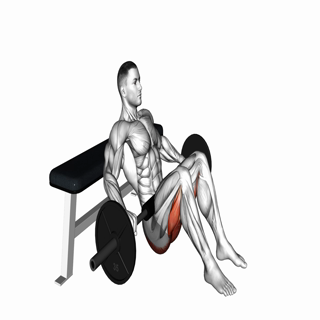
The hip thrust is a glute exercise where your upper back rests on a bench and you drive your hips up against a barbell, dumbbell or machine. The gluteus maximus does almost all the work, and the load peaks at the top where the glute is fully contracted. That is why the hip thrust is the foundation of glute training in the gym.
- Primary muscle
- Glutes
- Assisting muscles
- Lower Back, Hamstrings
- Equipment
- Barbell, Dumbbell
- Variations
- 2 exercise pages
Hip thrust: variations and what they target
The variations differ in where the load comes from. The barbell can be loaded heaviest, and a dumbbell is easy to start with.
- Barbell Hip ThrustThe standard version. The bar rests on the hips with a pad, and the load can go heavy. Setting up takes a moment, but it is the most effective for the glutes.
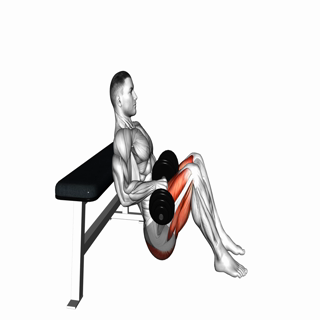 Dumbbell Hip ThrustOne dumbbell on the hips. A good way to learn the lift and to train at home, but big dumbbells run out quickly.
Sets and reps by goal
These are the numbers SisuLift uses when it programs this exercise. Sets come from the app's program templates and reps from the range inside which the app increases the weight.
| Goal | Sets | Reps | Effort | Rest |
|---|---|---|---|---|
| Strength | 3–4 | 4–6 | RPE 8–9 | 3 min |
| Muscle growth | 3–4 | 8–12 | RPE 7–8 | 3 min |
| General fitness and fat loss | 3–4 | 8–12 | RPE 7–8 | 3 min |
RPE describes how hard a set is on a scale of 1–10. RPE 8 means you would still have about two reps left.
When every set reaches the top of the range, SisuLift raises the weight by one equipment step next time and the reps drop back to the bottom of the range. In a calorie deficit the range stays the same, because that is when you want to keep your loads.
Hip thrust in your program
The hip thrust fits the start of a leg or glute day, when you want the glutes to do the main work, or after squats and Romanian deadlifts to complement them. It loads the lower back little, so it works in the same week as heavy deadlifts.
Around 10–20 sets a week is enough for most people's glutes, and the hip thrust can be three to four of them per session. Pair it with a movement that stretches the glute, such as the Romanian deadlift or the Bulgarian split squat.
Hip thrust weights rise quickly because the range of motion is short. SisuLift tracks the barbell and dumbbell versions separately and raises the weight when every set reaches the top of the rep range.
If the hip thrust feels more in your hamstrings or quads than your glutes, adjust your foot position before changing the weight. A small move closer to or further from the bench often solves it. A light glute bridge as a warm-up helps many people feel their glutes before the heavy sets.
The hip thrust is also a good option when your knees or lower back do not tolerate heavy squats. You can load the glutes heavily without a deep knee bend or your back carrying the weight, so it suits many people whose leg training is otherwise limited.
Technique essentials
- Sit on the floor with your back against a bench so the lower tips of your shoulder blades are on the edge. Place your feet hip-width apart so your shins are vertical at the top.
- Push through your heels and drive your hips up until your body forms a straight line from knees to shoulders. Squeeze your glutes at the top.
- Keep your chin close to your chest and your eyes forward throughout, so your pelvis and ribs stay in line.
Most common mistakes
Arching the lower back at the top. When you lift the hips too high by arching, the work shifts to the lower back and the glute does not contract properly. Stop when your body is straight and keep your ribs down.
Feet in the wrong place. If the feet are too far away, the hamstrings take over, and if they are too close, the quads do. Adjust your feet so the shins are vertical at the top and you feel the lift in your glutes.
Looking at the ceiling with the head back. When the head tilts back, the lower back arches easily and the hips stop short. Keep your chin close to your chest so your body pivots around the edge of the bench and the glute does the work at the top.
Frequently asked
What is a hip thrust?
The hip thrust is an exercise where your upper back rests on a bench, your feet are on the floor and you drive your hips up against a load. In Finnish it is called lantionnosto. When the back is on the floor instead of a bench, the exercise is called a glute bridge.
What muscles does the hip thrust work?
The gluteus maximus, which does almost all the work. The hamstrings and gluteus medius assist, and the quads hold the knee angle. In comparison studies the hip thrust has activated the gluteus maximus more than the squat, because the load peaks when the glute is fully contracted.
What is the difference between a hip thrust and a glute bridge?
In the glute bridge your back is on the floor, in the hip thrust your upper back is on a bench. The bench lengthens the range of motion, so the hips go lower and the load can be heavier. The glute bridge is easier to start with and suits warm-ups and home training, while the hip thrust loads the glutes more.
How do you use a hip thrust machine?
In the machine you sit on the bench, place the belt or pad over your hips and drive your hips up with the same movement as with a barbell. The machine guides the path and holds the load in place, so setup is quick and you can load heavy without a balance challenge. The effect on the glutes is the same as with a barbell hip thrust.
How do you set up the barbell for a hip thrust?
Roll the bar over your legs to your hips and use a thick pad or cushion under it. Large plates raise the bar high enough that you can get under it while sitting. Keep the bar in place with your hands throughout the set.
How many sets and reps of hip thrusts?
For strength 3–4 sets of 4–6 reps, for muscle growth 3–4 sets of 8–12 reps. Rest about 3 minutes between sets. Hold the top for a second, so the glute does the work instead of momentum throwing the load up.