



The best beginner program is full-body training three times a week, 6–8 basic lifts, and the same program for at least eight weeks. It sounds boring, and that is exactly why it works: progress comes from repetition and small weight increases, not from switching programs. Below are the principles, a ready-made sample program, and the mistakes that stop beginners most often.
Why is a training program important?
Without a program, you end up doing the same exercises at the same weight every time.
A training program ensures three things: that you load the whole body in balance, that the load increases in a planned way week by week, and that there is room for recovery between sessions.
Good beginner program, principles
Keep it simple. These principles are enough:
- Full body 3x/week, simple and effective
- Compound movements first, squat, bench, deadlift
- Start light, learn technique first
- 3 sets, 8–12 reps per exercise
- 1–2 rest days between workouts
Example program: 3 days per week
Train Monday, Wednesday, Friday.
Push focused
- 01Barbell squat, 3 × 8–10
- 02Bench press, 3 × 8–10
- 03Bent-over row, 3 × 10–12
- 04Tricep pushdown, 2 × 12–15
- 05Crunches, 2 × 15–20
Pull focused
- 01Deadlift, 3 × 6–8
- 02Overhead press, 3 × 8–10
- 03Lat pulldown, 3 × 10–12
- 04Bicep curl, 2 × 12–15
- 05Lateral raise, 2 × 12–15
Full body
- 01Leg press, 3 × 10–12
- 02Incline dumbbell press, 3 × 10–12
- 03Seated cable row, 3 × 10–12
- 04Crunches, 3 × 15–20
- 05Calf raise, 3 × 15–20
Add weight when you complete all reps with clean form.
Common beginner mistakes
These mistakes are common at the gym, avoid them to progress faster:
- Starting too heavy, ego lifts lead to injuries
- Skipping legs
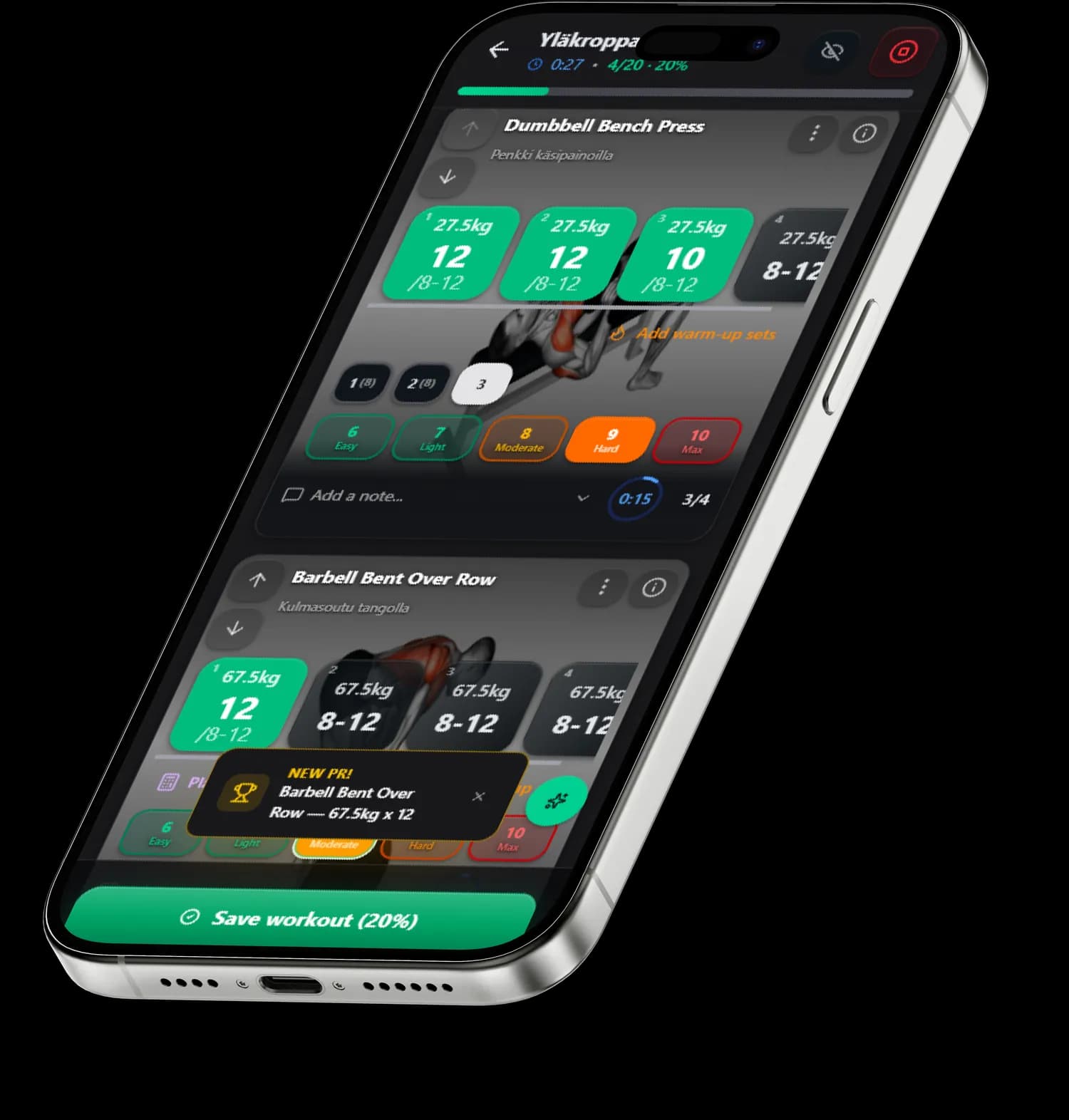
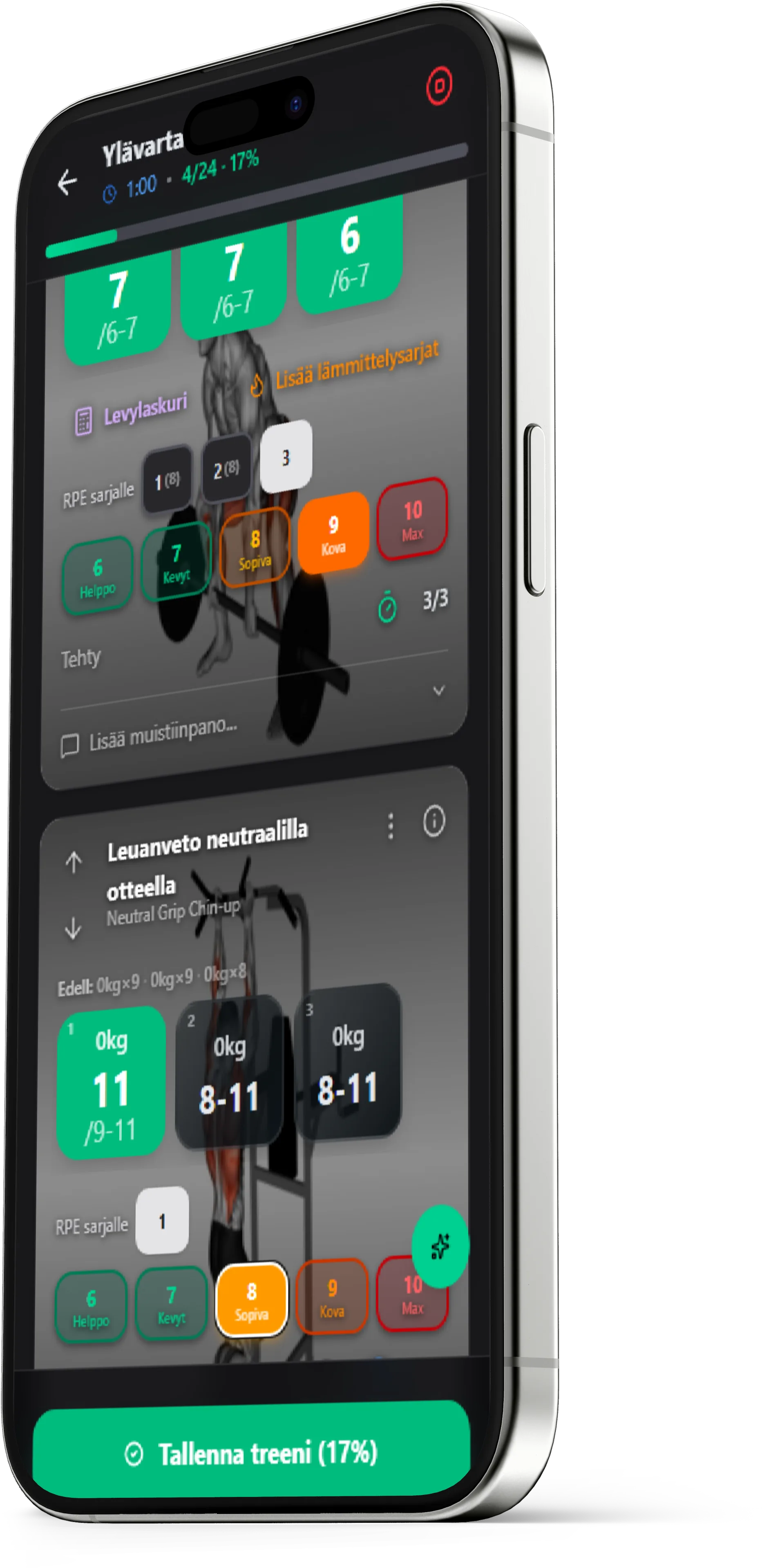
- Not logging workouts
- Changing programs every week
- Forgetting recovery
Warm-up and cool-down
Many beginners jump straight into heavy weights without warming up. This increases injury risk and reduces performance.
Warm-up
- 5-10 minutes of light cardio (stationary bike, elliptical or brisk walking)
- Dynamic stretches for target muscle groups
- 1-2 warm-up sets with light weight before each exercise
Cool-down
- 5-10 minutes of easy walking or light cycling
- Static stretches for major muscle groups (15-30 seconds each)
Rule of thumb: warm-up raises heart rate and prepares muscles, cool-down lowers heart rate and starts recovery.
4-week progression example
Here's how weights and volume typically progress for a beginner (squat example):
- Week 1: 40 kg × 3 × 10 (learn technique, feel the movement)
- Week 2: 45 kg × 3 × 10 (small weight increase, same rep range)
- Week 3: 50 kg × 3 × 8-10 (weight up, reps may drop slightly)
- Week 4: 50 kg × 3 × 10 (same weight, reps back up = getting stronger)
This is linear progression, the simplest and most effective model for beginners.
Nutrition basics for beginners
Training is only half the equation. Without proper nutrition, your body won't grow or recover properly.
- Protein: aim for 1.6-2.2g per kg bodyweight daily. Good sources: chicken, fish, Greek yogurt, eggs, legumes.
- Calories: eat at least maintenance calories. As a beginner, you can build muscle and lose fat simultaneously (body recomp).
- Meal timing: 3-5 meals per day with protein in each. Total intake matters more than timing.
- Hydration: 2-3 liters of water daily. Extra 0.5-1 liter during training.
- Supplements: as a beginner, you don't need any, focus on whole foods. Creatine is the only supplement with strong research evidence.
Don't overcomplicate nutrition. Eat enough protein, enough calories, and sleep 7-8 hours. That's enough to start.
Progressing beyond beginner
Beginners progress quickly at first, the honeymoon phase where weights go up almost every session.
This slows over time, and then it's time for more advanced programming.
Signs you're ready: weights don't increase linearly, you want to train more than 3x/week, you know your body.
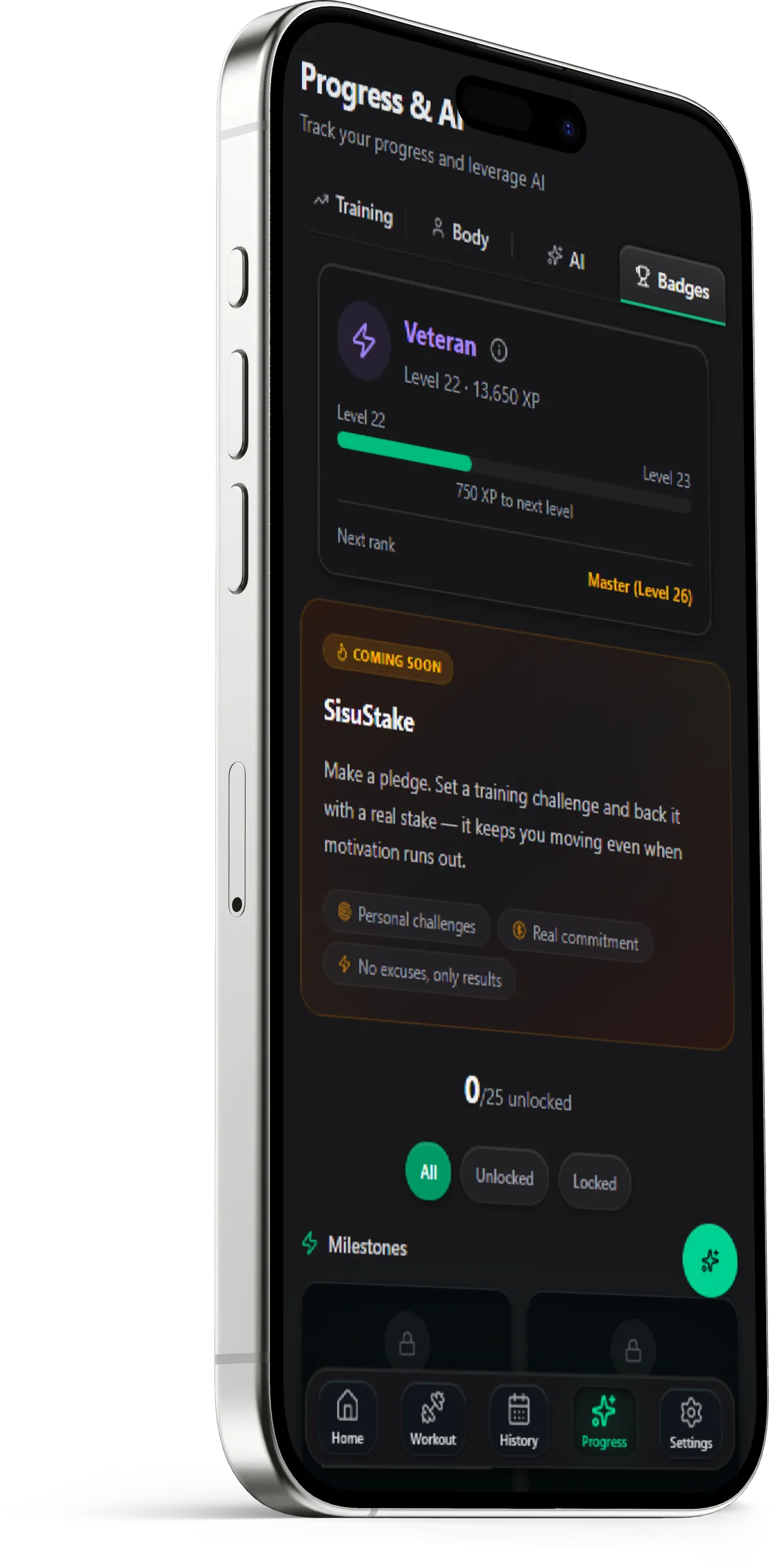
How can AI help a beginner?
An AI workout app is like a personal trainer always with you:
- Selects suitable exercises for your experience level
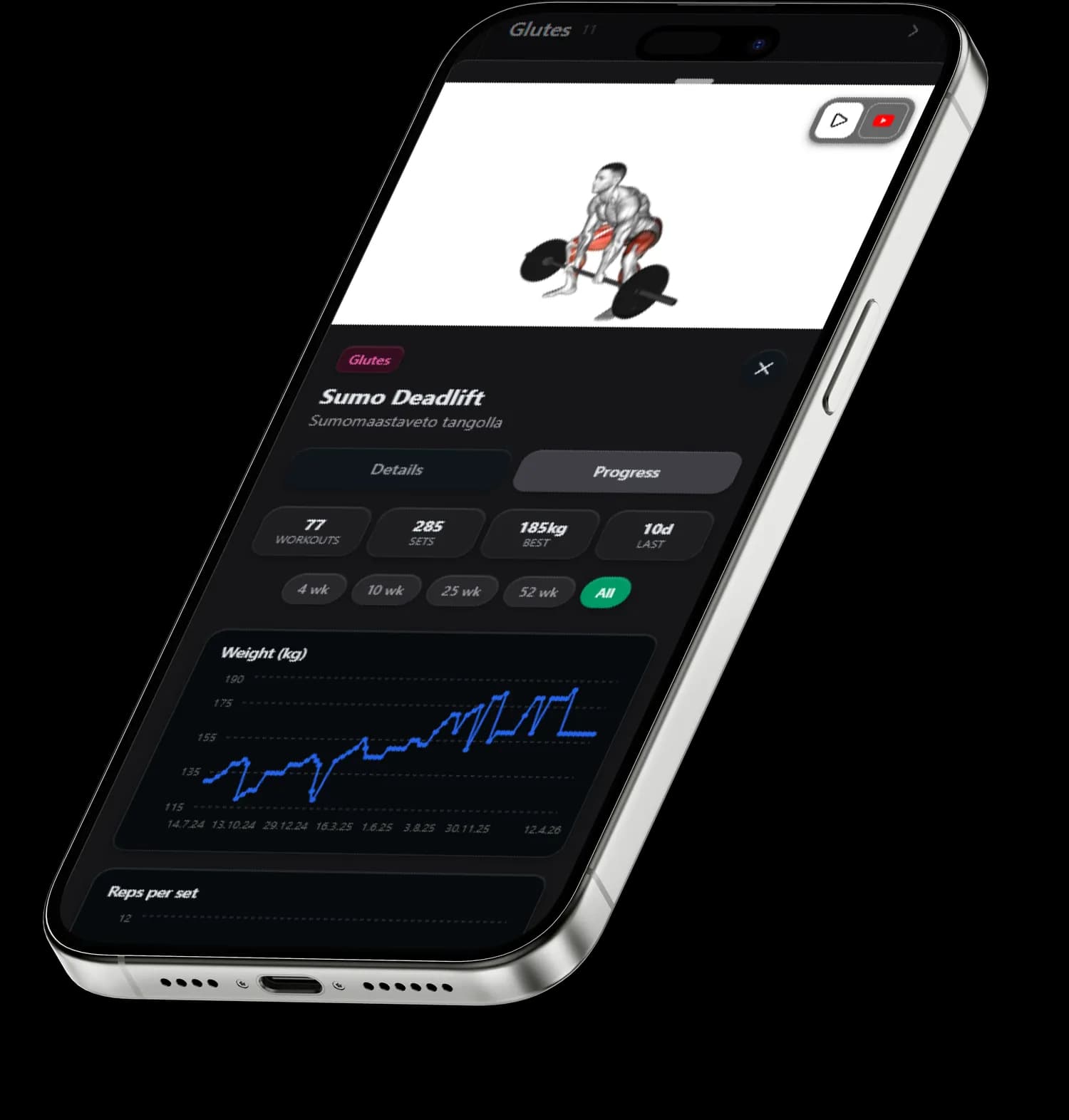
- Suggests weights based on your previous performance
- Adjusts the program automatically as you progress
- Knows when to take an easier week
→ Read also: AI workout app, complete guide | Best gym app 2026